
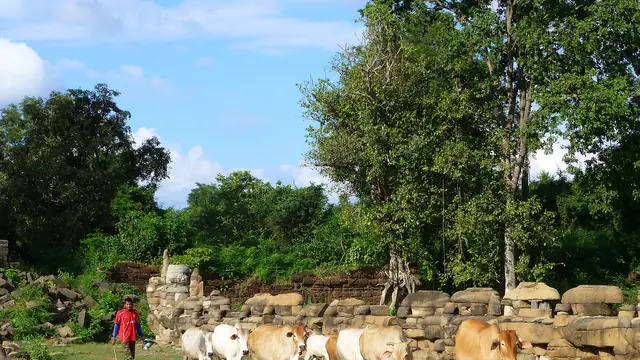
The Forgotten Ruins of Cambodia: A Guide Beyond Angkor Wat
Discover Cambodia's forgotten Khmer ruins beyond Angkor Wat. Koh Ker, Beng Mealea, Preah Khan, Banteay Chhmar, and other temples without the crowds.
Beyond the Angkor temples, a country of forest, rivers and archaeology that almost nobody walks through slowly.
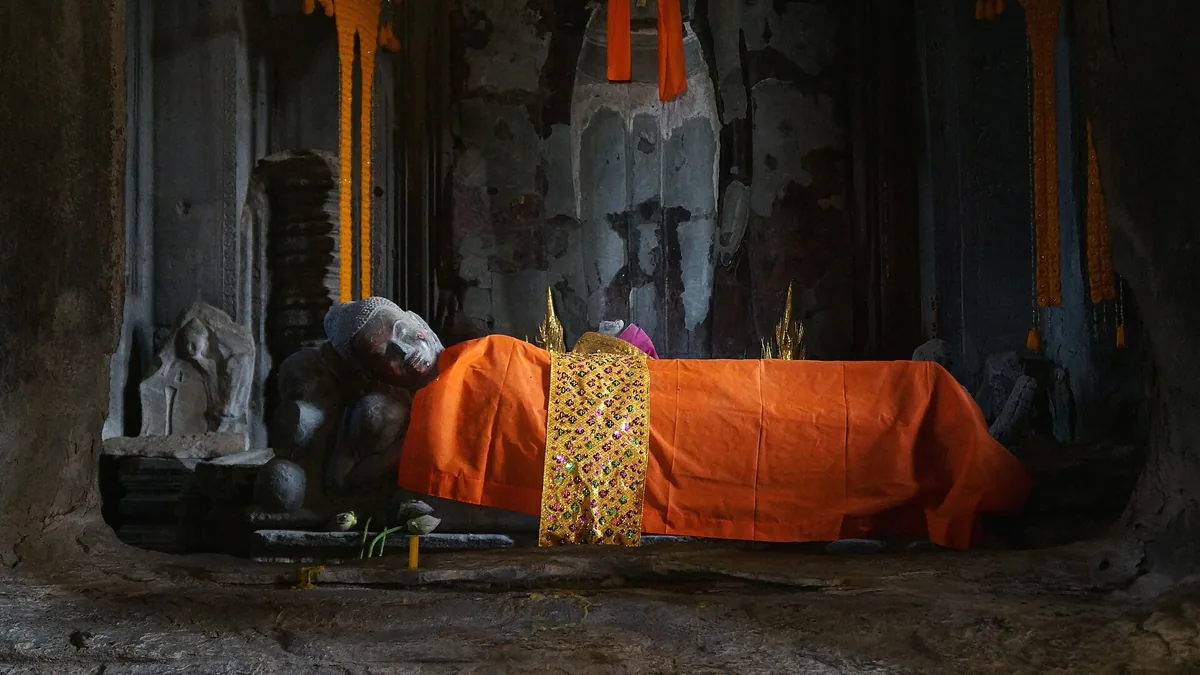
Most visitors to Cambodia spend three days at Angkor and leave. That is a reasonable choice and also a shame. The Khmer empire covered much of mainland Southeast Asia for six centuries, and its infrastructure — reservoirs, bridges, hospitals, rest houses — is still traceable across the countryside. Add the Cardamom mountains, the Mekong's river towns, and the coast, and you have a country that rewards a slower, more lateral trip than the standard package allows.
Reference facts for planning Cambodia.
Where the good months sit, and why.
November – February
The comfortable season. Low humidity, manageable heat, and the standard time to visit everything.
March – May
Temperatures reach 40 °C, but this is when the countryside is greenest before the rains and crowds are thinnest.
June – October
Afternoon downpours, low prices, full reservoirs and temples without crowds. Mornings are often clear.
Months to think twice about: Trying to cover Angkor, Phnom Penh and the coast in under a week. Distances look small on a map and the roads are slower than they appear.
The places that justify the trip, and the guides we have written for them.
Siem Reap
Roughly 400 km² of temples, reservoirs and embankments. Two full days is the minimum; four is better.
Koh Ker, Beng Mealea, Preah Vihear
Remote temple complexes where you can be genuinely alone. Some require a day trip and a permit.
Southwest
One of the largest remaining rainforests in mainland Southeast Asia, with community-run ecotourism and river kayaking.
Kratie, Stung Treng
Slow provincial towns, freshwater dolphins, and a stretch of river that feels a century away from Phnom Penh.
Most nationalities can obtain an e-visa online or a visa on arrival for a 30-day tourist stay.
Apply only through the official Cambodian e-visa government portal; commercial sites charge substantially more for the same document.
Rough per-person costs, excluding international flights.
Three ways to structure a trip, depending on how much time you have.
7 – 9 days
Phnom Penh, Siem Reap, Battambang. Add Kampot and Kep if you have two more days.
8 – 10 days
Siem Reap base with day trips to Koh Ker, Beng Mealea and Preah Khan, then south to the coast.
10 days
Phnom Penh, Chi Phat community trek, Koh Kong, Sihanoukville and Kampot. Best in the dry season.
Buses and minivans connect the main towns cheaply. Private cars with a driver are affordable for groups and far more flexible for remote temples. The rail line between Phnom Penh and the coast has resumed passenger service but is slow. Roads have improved dramatically in the last decade; journey times are still longer than the distances suggest.
Cambodia is generally safe for travellers, with petty theft the main urban concern. The serious, ongoing hazard is unexploded ordnance in rural areas — stay on marked paths and cleared ground, particularly near old conflict zones and around remote temple sites. Do not wander off established tracks in forested areas.
Long-form guides published for this destination.
Discover Cambodia's forgotten Khmer ruins beyond Angkor Wat. Koh Ker, Beng Mealea, Preah Khan, Banteay Chhmar, and other temples without the crowds.
