The Last Roadless Areas in the Lower 48: Where America Still Has No Roads
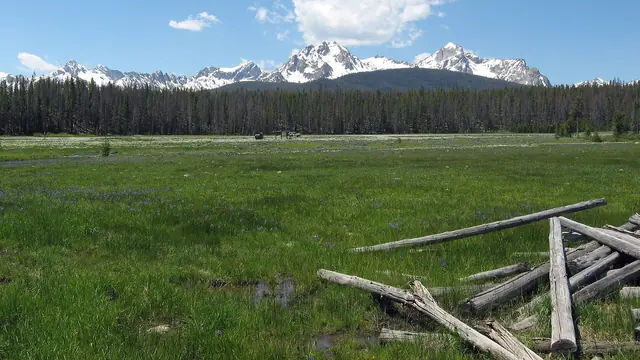
Millions of acres in the continental US have no roads at all. What roadless areas are, where the largest ones sit and how to actually get into them.
Five national parks, a dozen time zones of scenery, and more public land than most countries have in total.
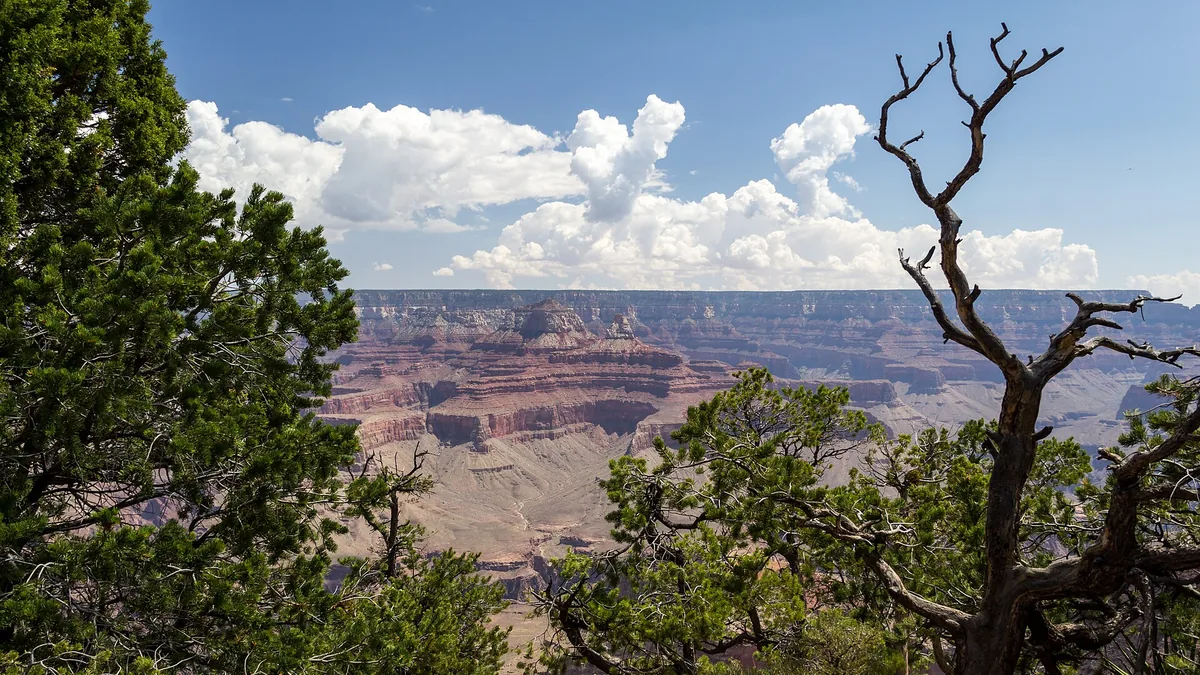
The United States is a destination where the scale works against you: it is easy to spend two weeks in one state and still miss the thing you came for. The west is where the exploration payoff is highest — canyon country, high desert, alpine ranges and a coastline that runs from fog forest to subtropical keys. Public land is the reason: national parks, national forests and Bureau of Land Management holdings cover roughly a third of the country, and most of it is open to anyone with a car and a pair of boots.
Reference facts for planning United States.
Where the good months sit, and why.
April – May
Desert parks are at their best: mild days, wildflower bloom in good rain years, and far fewer people than summer.
September – mid-October
The all-round sweet spot. Aspens turn in the Rockies, the desert cools, and the summer crowds have gone home.
December – February
The only sane time to visit Death Valley and the southern Utah parks if you plan to hike in the middle of the day.
Months to think twice about: July and August in the desert southwest. Midday temperatures regularly pass 38 °C (100 °F), afternoon monsoon storms close slot canyons without warning, and the popular trails become queues.
The places that justify the trip, and the guides we have written for them.
Southern Utah
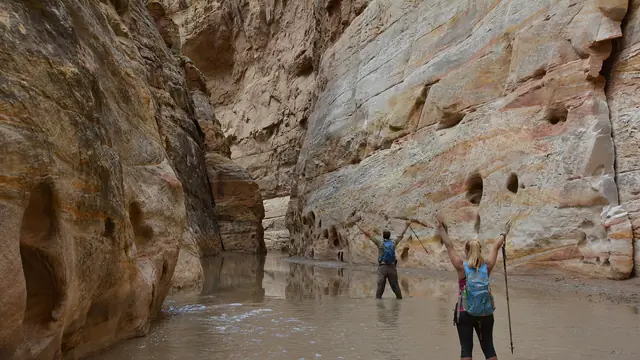
Five national parks within a few hours' drive, plus millions of acres of BLM land where you can hike without a permit or a trailhead car park.
Arizona, Nevada, New Mexico
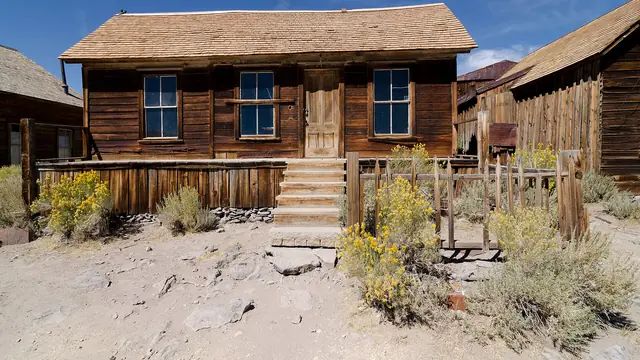
Mining and railroad settlements left behind when the ore or the route ran out. Many are on public land and still walkable.
California
Granite, alpine lakes and the Pacific Crest Trail. Permits are competitive but the walk-in quota system is genuinely workable.
Alaska
The only place in the country where you can drive for an hour from a city and be somewhere with no mobile signal and a real bear population.
Eastern seaboard
Older, softer mountains with a dense shelter network — the best value beginner long-distance hiking in the country.
Most visitors need either an ESTA authorisation (visa waiver) or a full B-2 visitor visa.
Apply for ESTA only at the official U.S. Customs and Border Protection website. Several look-alike sites charge inflated fees.
Rough per-person costs, excluding international flights.
Three ways to structure a trip, depending on how much time you have.
10 – 14 days
Las Vegas or Salt Lake City round trip through Zion, Bryce, Capitol Reef, Arches and Canyonlands. The classic first-timer route for a reason.
7 – 10 days
Phoenix, Sedona, Grand Canyon, Monument Valley, Moab. Best in spring or autumn; add a day of slack for weather.
10 days
San Francisco to Seattle along Highway 101 and the coast road, through redwood forest and Olympic rainforest.
Outside a handful of dense cities, the United States is a driving country. Intercity rail is slow and thin west of Chicago, and many trailheads are 50 km or more from the nearest bus stop. If you cannot drive, concentrate on a single city plus guided day trips, or pick Alaska and the national parks where shuttle systems exist.
The outdoors carries real, non-trivial risks: flash floods in slot canyons, hypothermia in summer alpine storms, heat illness in the desert, and wildlife in Alaska and the northern Rockies. Cell coverage disappears within minutes of most trailheads — carry a satellite messenger or personal locator beacon on anything remote.
Long-form guides published for this destination.
Millions of acres in the continental US have no roads at all. What roadless areas are, where the largest ones sit and how to actually get into them.
Escape the national park crowds with seven hidden hiking trails in Utah, from secret slot canyons to remote desert peaks and quiet mountain summits.
Explore five abandoned towns in the American Southwest you can still visit. Bodie, Terlingua, Jerome, Rhyolite, and Glenrio offer frontier history and photography.