
Gear
How to Start a Fire Without Matches: 7 Methods That Work When It's Wet
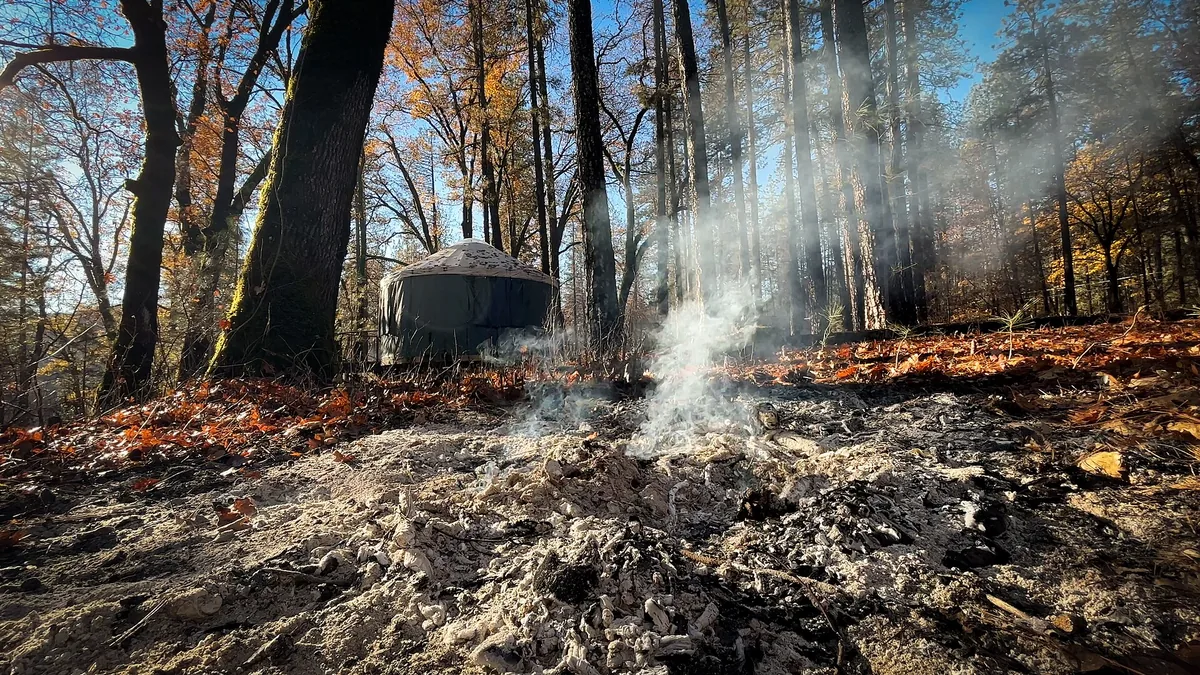
Key takeaways
- Spark is rarely the problem; dry tinder is almost always the problem.
- A ferro rod works wet, which is why it beats matches in a real emergency.
- Friction fire is a skill you must practice before you need it, not during.
- Building a fire lay that sheds water matters more than the ignition method.
Making fire without a lighter is the survival skill that looks hardest and turns out to be mostly about preparation. The ignition source is rarely the difficult part: a spark is easy to produce by several methods, and any of them will light good tinder. What defeats people is finding or making dry tinder in wet conditions, and building a fire lay that lets a small flame grow into a real fire using wood that is damp on the outside. Learn those two things and all seven ignition methods below become straightforward.
The actual problem is tinder, not spark
Ask anyone who has taught fire-starting what students fail at, and the answer is always the same. They produce a spark easily, get a brief flicker, and watch it die because the material they are trying to light cannot sustain a flame. A spark is a few hundred degrees for a fraction of a second; turning that into a self-sustaining fire requires a material that ignites readily and burns long enough to dry and ignite the next size of fuel up.
Tinder needs to be dry, fine and exposed. Dry means genuinely dry, not damp-dry — moisture content is the whole game. Fine means a high surface area relative to volume, so individual fibres catch rather than the mass warming slowly. Exposed means fluffed up rather than compacted, so oxygen can reach the flame.
In wet conditions, tinder exists but it is hidden. Look underneath things: under the bark of dead standing trees, inside dead standing grass stems, under logs, beneath dense conifer cover where rain has not reached, and inside the dense base of grass tussocks. The centre of a dead branch still attached to a tree is often bone dry even in a week of rain, because the canopy above has shielded it. Dead wood lying on the ground is almost always wet; dead wood still standing is frequently dry.
Collect far more tinder than you think you need. A handful is a test; a stuff sack full is a fire. The failure pattern is always the same — a small amount of tinder produces a small flame that burns out before the next fuel size catches, and by then you have used everything you gathered.
Method one: the ferrocerium rod
A ferro rod is the most useful fire-starting tool you can carry. It produces sparks at around 3,000 degrees Celsius, works when wet, works at altitude, lasts for thousands of strikes, and weighs almost nothing. It is not a flint and steel; the alloy shaves off burning metal fragments when scraped, which is why the sparks are so hot and so consistent.
Technique matters more than strength. Hold the rod with the tip resting on your tinder, then pull the rod back toward you while keeping the striker stationary and pressed firmly against it. Pulling the rod away, rather than pushing the striker forward, keeps the sparks where you want them instead of scattering them. Use the back of a knife, a dedicated striker, or a hacksaw blade — a sharp spine, not a sharp edge, because you want to shave the rod, not cut it.
Prepare the tinder bundle so it has a nest of fine fibres and a small pocket where the sparks can land. Direct the sparks into that pocket rather than at the outside of the bundle. Once you have a glowing ember rather than a flame, blow gently and steadily, then increasingly firmly as the ember grows. Most people blow too hard too early and extinguish what they have.
Buy a rod that is at least eight centimetres long and thick enough to grip with cold hands. The tiny keychain rods work but are genuinely harder to use when your hands are numb, which is exactly when you will need them.
Method two: focusing sunlight through a lens
Any converging lens will work: a magnifying glass, a camera lens, the lens from a pair of binoculars, a reading glass or the bottom of a glass bottle filled with water. Concentrate the sun's rays to a single small point on dark, fine tinder and hold it steady.
The advantage is that the technique is trivial and requires no consumables. The disadvantages are that it requires direct sun, works poorly at high latitudes or in winter when the sun is low, and needs very dark tinder that absorbs rather than reflects the light. Charred cloth, dark fungus, and the blackened tips of already-burned material work best.
The practical trick is to hold the lens close enough that the light spot is small and intense, then adjust distance rather than chasing the tinder. A spot of a few millimetres is what you want. Once you have a smoking point, blow it into flame exactly as you would with any other ember.
Method three: battery and steel wool
Steel wool ignites readily from an electrical short because the fine filaments have enormous surface area and very little mass. Press the terminals of any battery — a 9-volt is ideal, but a phone battery, a car battery or a set of AA cells wired in series will all work — against a small pulled-apart tuft of fine steel wool. It flares almost immediately.
Add your tinder before you make the connection, because steel wool burns out in seconds and will not wait while you look for something to light. This method is excellent in an emergency, works with almost any battery you might be carrying, and is one of the few that works reliably in wet conditions.
The same principle applies to fine steel wire and to the fine metal shavings from a knife sharpened on a rough stone. Anything that is metal, extremely fine, and can be short-circuited will behave similarly.
Method four: chemical ignition
Some chemical combinations ignite on contact or after a short delay. Potassium permanganate mixed with glycerine ignites after a delay of roughly thirty seconds to a minute, which gives you time to place it and step back. Potassium permanganate scraped against a rough surface with a small amount of antifreeze behaves similarly. Calcium carbide reacts with water to produce acetylene, which is highly flammable.
These methods are reliable and genuinely useful if you are carrying the specific chemicals deliberately. They are not improvised in the field from things you happen to have, so their value depends entirely on pre-planning. Commercial fire-starting products based on similar chemistry are widely available and are a far more practical way to access the same reliability.
Household chemicals that people improvise with are mostly either less effective than folklore suggests or genuinely dangerous to handle. Improvised chemical fire-starting is not a skill worth building a plan around; carry a reliable mechanical igniter instead.
Method five: the bow drill
Friction fire is the skill that impresses people and the one that matters least in a real emergency, because it is far more demanding than carrying a ferro rod. It is still worth learning, because it is the most satisfying and because the underlying understanding of material properties transfers to every other method.
A bow drill consists of a spindle, a hearth board, a bearing block and a bow. The spindle spins against the hearth board under downward pressure, friction generates hot dust, and the dust accumulates in a notch and eventually forms a coal. The coal is transferred to a tinder bundle and blown into flame.
Material selection is most of the skill. The spindle and hearth should be the same non-resinous soft wood — willow, poplar, cedar, basswood — and both must be dead and dry. Resinous woods do not work well. The bow string should have good grip, the bearing block should be hard and lubricated, and the notch cut into the hearth should reach roughly a third of the way to the centre of the burn hole.
Technique is the rest. Start slowly to seat the spindle, build speed smoothly rather than jerkily, and apply steady downward pressure — too little and you make no dust, too much and you stall the spindle or burn through the bearing block. The dust must be dark and smoking, not pale and powdery. Learn this in your garden over several sessions with dry material before attempting it in the field, and accept that the first several attempts will produce smoke and no coal.
Method six: the hand drill
The hand drill is the bow drill without the bow: you spin the spindle between your palms. It is more demanding still, requires good technique and tougher hands, and is largely a demonstration skill.
The key differences are spindle length and hand position. A longer, thinner spindle lets you run your hands down its length in a continuous stroke rather than in short repeated motions. Keeping the spindle vertical and maintaining consistent speed are the two things that determine success.
If you want one friction method, learn the bow drill first. The hand drill is a progression from it, not a substitute for it.
Method seven: flint and steel
Striking high-carbon steel against a hard, sharp stone shaves off small particles of steel that oxidise rapidly and glow. The resulting sparks are cooler and shorter-lived than ferro rod sparks, so they require exceptionally fine, dry tinder — charred cloth, charred fungus or very fine plant down.
This is the historical method and it still works, but it is material-dependent in a way that ferro rods are not. You need a carbon steel striker, not stainless; you need a genuinely hard, sharp-edged stone such as flint, chert, quartz or jasper; and you need charred material, because natural tinder will rarely catch from a flint spark.
Making char cloth is simple: heat small squares of cotton fabric in a sealed tin over a fire until they stop smoking, then let them cool without opening the tin. The result is black, brittle fabric that catches a spark readily. It is a worthwhile thing to carry in a fire kit even if you also carry a ferro rod.
Building a fire lay that works with damp wood
Whichever ignition method you use, the fire lay decides whether you end up with a fire. Fuel must increase in size gradually, with each size able to dry and ignite the next.
Start with a tinder bundle the size of your two cupped hands. Over it, build a teepee or a lean-to of twigs no thicker than a matchstick. Above that, pencil-thickness sticks. Then finger-thickness, then thumb-thickness. Only move to wrist-thickness wood once you have a flame that is clearly established and self-sustaining.
The most common structural mistake is building a flat pile. A fire needs airflow from below and it needs to shed water from above. Build the fine material in a loose cone that lets air in at the base, and if it is raining, build a platform of larger split wood underneath so the tinder is off the wet ground, plus a reflector or lean-to of larger pieces on the windward side.
Use dead standing wood and split it. Splitting a damp branch exposes dry interior wood, which is the single most effective technique for burning fuel in wet conditions. A branch that will not light on the outside will burn readily on the freshly exposed face.
Once the fire is established, add wood in a loose arrangement rather than packing it tight. Fires need oxygen as much as fuel, and a densely stacked fire smoulders rather than burns.
What to carry so this never matters
The realistic answer to starting a fire without matches is to not need to. Carry three independent ignition sources: a ferro rod, a stormproof lighter and waterproof matches, kept in different locations so losing one does not lose all three. Add a small quantity of commercial fire starter, which burns hot and long enough to dry damp wood, and a few pieces of char cloth or waterproof tinder.
Keep it all in a small waterproof container with the striker attached to the rod, and practice with the actual kit you carry at least twice a year, in the worst weather you can tolerate. The ferro rod in your pack has never been used in rain; the one you used in your garden in a downpour has.
Conclusion
Spark is easy; tinder is hard; the fire lay is everything. Learn the ferro rod first because it is the method that works when you actually need it, carry chemical or commercial fire starters as your reliability layer, and treat friction methods as a skill to develop rather than a plan to depend on. Collect several times more tinder than seems reasonable, split damp wood to expose the dry interior, and build upward through fuel sizes rather than skipping a step. Fire in bad conditions is a preparation problem, and preparation happens at home.
Keep reading
The Best Tents for Wild Camping in 2026: 8 Shelters Tested in Real Weather
Compare the best wild camping tents of 2026 on weight, weather resistance and pack size. Real picks for solo trekkers, pairs and shoulder-season trips.
How to Build a Survival Shelter in the Wild: 6 Designs That Actually Keep You Dry
Six wilderness shelter designs — lean-to, debris hut, tarp configurations and snow shelters — with the situation each one is actually built for.
The Best Headlamps for Night Hiking and Camping in 2026
Lumens, beam pattern, battery life and red-light modes explained. Picks for the best hiking headlamps at every budget, with what actually matters.
