Camping Guide for Beginners

Sleeping outside comfortably is a skill, not a product purchase.
Camping guide
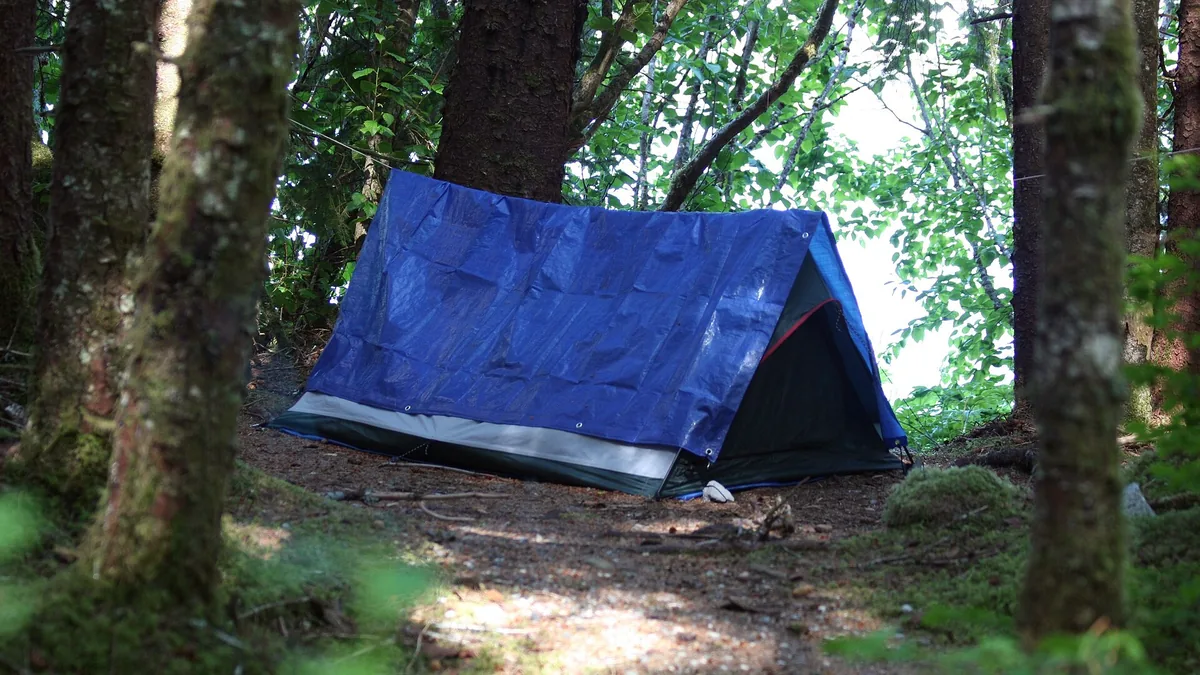
Photo: National Park Service / Public domain · Wikimedia Commons

The difference between a miserable night and a good one is almost never the tent. It is whether you are warm from below, whether your sleeping bag rating matches the actual temperature, and whether you put the tent somewhere sensible. Most first-time camping problems are solvable with a sleeping pad and a bit of site selection.

Getting started

What to do first, in the order that matters.

  • Borrow or rent for the first trip. Camping gear is expensive, bulky, and highly dependent on your personal comfort thresholds.
  • Camp within an hour of home the first time, so a bad night is a story rather than an ordeal.
  • Set the tent up in your garden or living room once before you go. The first pitch should never be in the dark.
  • Two people need a two-and-a-bit person tent, not a two-person tent. The stated capacity assumes no gear and no movement.
  • Learn to read a weather forecast for wind, not just rain — wind is what destroys tents.

Gear checklist

The items that genuinely earn their weight.

  • Tent with a full rain fly, pitched with the fly taut and off the inner
  • Sleeping bag rated to a few degrees below the lowest temperature you expect
  • Sleeping pad with an R-value appropriate to the season — this is the warmth you are missing
  • A stove, fuel, and a lighter kept somewhere dry
  • Head torch, plus a spare set of batteries
  • Layers including a warm hat: most heat loss in a sleeping bag is from the head and extremities
  • A dry bag or bin liner for anything that must not get wet
  • A small repair kit: tape, spare pole section, guyline

Safety notes

What actually goes wrong.

  • Never cook inside a tent or vestibule. Carbon monoxide builds up fast and has no smell.
  • Check for dead branches overhead before pitching — 'widowmakers' fall in calm conditions.
  • Do not pitch in a dry riverbed or a hollow, however flat and sheltered it looks.
  • Keep all food out of the tent in bear country, and know which country you are in.
  • Know the fire rules for the specific site. Many places prohibit ground fires entirely.

Common mistakes

The ones we see repeated most often.

  • Skipping the sleeping pad, then being cold because the ground took the heat
  • Trusting the sleeping bag's 'comfort' rating rather than its 'limit' rating
  • Pitching on a slope with your head downhill
  • Leaving the rain fly off on a clear night and waking up soaked in condensation
  • Not checking the ground for stones and roots before lying down
  • Packing wet gear away and then discovering mildew two weeks later

Camping guides

Not sure where to start?

Begin with our 3-day hiking packing list. Most gear and comfort problems are solved before you ever reach the trailhead.

Explortaion Travel & exploration guides
Gear