
Safety
Your Vehicle Breaks Down in the Desert: A Survival Checklist That Works
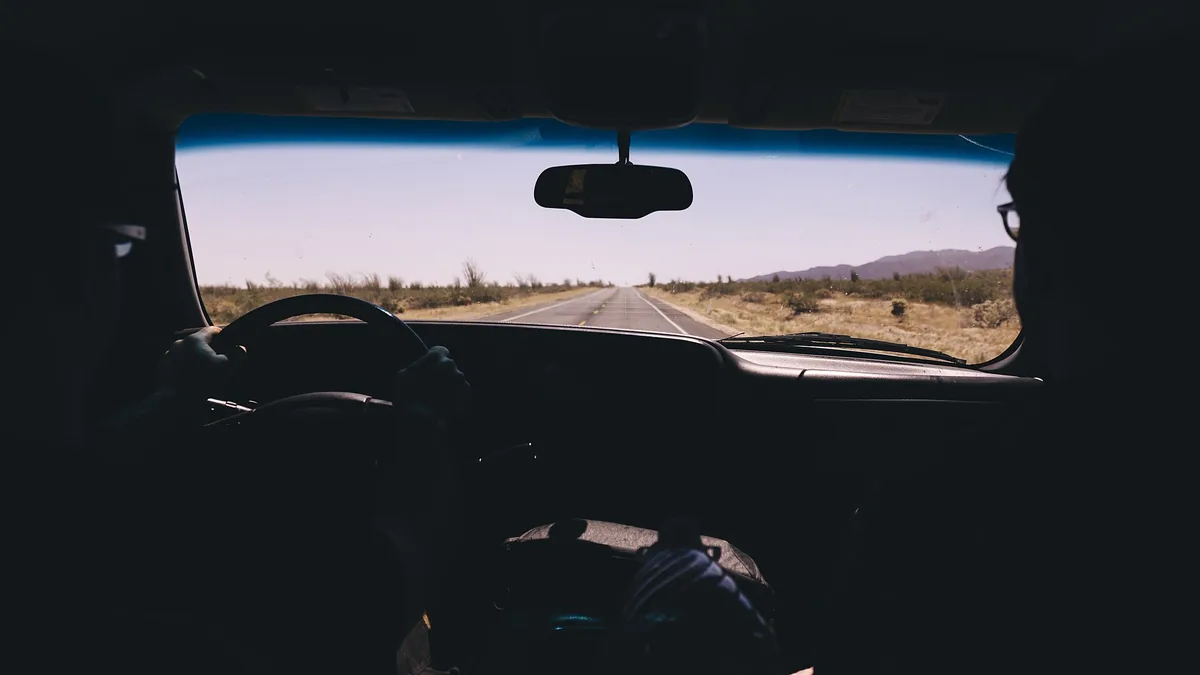
Key takeaways
- In almost every case, staying with the vehicle is the correct decision.
- Water discipline beats water quantity; rationing by schedule beats drinking on impulse.
- A vehicle is a large, reflective signal object — make it obvious from the air.
- Most desert fatalities involve leaving the vehicle, not the breakdown itself.
A vehicle breakdown on a remote desert road is survivable in almost every case, and the people who die from it usually do so because they made one specific decision: they left the vehicle. Understanding why that is the wrong decision, and what to do instead, is most of the skill. The rest is preparation, because the items that turn a stranded night into an uncomfortable story weigh almost nothing and cost very little.
Stay with the vehicle
This rule is repeated so consistently by every desert survival authority because the accident record supports it overwhelmingly. A vehicle is large, reflective, visible from the air and carries your water, shade and shelter. A person walking is small, easily missed, and consuming water at a rate that increases with every step.
The distance that looks walkable is the specific trap. On clear desert air, distances are consistently underestimated — a ridge that looks twenty minutes away may be two hours. People set out for help in the late afternoon, arrive nowhere by dark, and are then lost, dehydrated and away from the vehicle that was keeping them alive.
There are narrow exceptions. If you can see a building you know is occupied and it is genuinely close; if your vehicle is on fire or in a position where staying is immediately dangerous; or if you know that a specific person will come looking along the route at a specific time. Outside of those, staying is the correct call.
Leaving a clear note helps in the narrow cases where you must go: where you have gone, when you left, your direction of travel, and how many people and how much water are at the vehicle.
The first hour: what to do immediately
Do not try to fix the vehicle in the heat of the day if the repair can wait. Working on a hot engine in direct sun is how people get into trouble quickly, and a repair done badly can make the situation worse.
Move yourself into shade first. If there is no natural shade, make it: the shadow under the vehicle is significant, and a tarp, blanket or jacket strung from the vehicle creates usable shade in minutes. This matters more in the first hour than anything else you could do, because shade reduces water loss dramatically.
Take stock accurately. How much water do you actually have, and how many people is it for? Is there any food? Does the phone have any signal — and walk to higher ground to check rather than assuming from the driver's seat. What is your exact location, and can you state it in a way a rescuer would understand?
Then tell someone. Even with no signal, most phones can make emergency calls on any available network, and a text message will often send later when a brief signal appears. If you filed a trip plan before leaving — and you should have — the clock on someone coming to look for you is already running.
Water discipline beats water quantity
The standard figure of a gallon per person per day applies to someone doing moderate activity in desert heat. Sitting in shade, doing nothing, an adult needs considerably less. The mistake is either rationing to almost nothing out of fear, or drinking freely because the supply looks adequate.
Ration by schedule rather than by thirst. Allocate a fixed amount per person at set intervals during the day and stick to it. Thirst is a poor guide in dry air — you can be significantly dehydrated without feeling thirsty, and by the time you feel it you are already behind.
Do not ration to the point of immobility. The purpose of water is to keep you functional and thinking clearly. Severe dehydration produces confusion and poor decisions, which then produce more dehydration. Dehydration also impairs your ability to regulate temperature, which accelerates heat illness.
Do not drink water you cannot treat, and do not drink urine or seawater or radiator fluid. Collect what you can instead. Dew on the vehicle in the early morning can be wiped up with a cloth; a tarp or a jacket spread overnight will collect usable moisture; and a solar still dug in the ground produces small amounts. These are marginal sources, but they are real and they make a difference over a second day.
Signalling: make the vehicle obvious
Your vehicle is your best signal. Raise the bonnet, which is internationally understood as a distress sign. Open doors. If you have anything reflective — a mirror, a phone screen, chrome, a CD, the reflective side of a sunshade — use it to flash toward aircraft. A signal mirror is the smallest, most effective signalling device you can carry.
A fire at night is an excellent signal, built with green vegetation or wet material to produce smoke by day and flame at night. In a desert, vehicle tyres burn with thick black smoke that is visible for a very long distance, and while this should be a last resort because you may need the tyre, the visibility it creates can be decisive.
Contrast matters more than size. Rescuers spot anomalies against a uniform background. Anything that creates a strong geometric shape or a strong colour contrast on the ground — rocks arranged in a large X, dark clothing laid out in a pattern, trauma sheeting — reads from much further away than a person waving.
A satellite messenger or personal locator beacon changes the entire calculation by removing the question of whether anyone knows where you are. For anyone driving remote desert routes regularly, it is the single most valuable item you can carry.
Heat by day, cold by night
Desert survival is a two-sided problem, and the second side surprises people. Clear, dry air with no cloud cover radiates heat away rapidly overnight, and desert temperatures can drop below freezing even where the daytime maximum was extreme.
Daytime risk is heat illness. Heat exhaustion presents as heavy sweating, weakness, headache and nausea, and it responds to shade, fluids and rest. Heat stroke is a medical emergency: confusion, cessation of sweating, hot skin and collapse. It requires immediate, aggressive cooling and evacuation, and it kills quickly. The difference between the two matters, because the treatment for one is supportive and the treatment for the other is urgent.
Night-time risk is hypothermia, and it is entirely predictable. Carry warm layers in the vehicle even in summer. Insulate yourself from the ground rather than lying directly on it, because conduction will pull heat out of you all night. Get inside the vehicle if possible, or build a windbreak and a ground layer if not.
This is the argument for not leaving the vehicle: it solves both problems at once, as shade by day and shelter by night.
What to carry so it never becomes an emergency
Most of this is cheap and lives permanently in the vehicle. Water, well beyond what you think you need for the drive, carried in multiple containers so one leak does not lose it all. A wide-brimmed hat, a tarp or emergency shelter, warm layers, and a sleeping bag or blankets.
A signalling kit: mirror, whistle, torch with spare batteries, and ideally a satellite communicator or beacon. A basic tool kit, spare tyre in good condition, jack, and the knowledge to use them. Recovery gear — traction boards, a shovel, a tow strap — if you are driving soft surfaces.
Spare fuel, a first aid kit, sunscreen, and food that does not need cooking. A paper map, because phones fail and paper does not. And a charged power bank, because your phone is both your torch and your only link to the outside world.
The item most often missing is the trip plan. Tell someone where you are going, your route, when you expect to arrive, and what to do if you do not. That single habit is what starts a search, and it costs nothing.
Driving practices that prevent most of it
Do not drive remote desert routes alone if you can avoid it, and never drive them without telling anyone. Check fuel range honestly against the distance to the next fuel, and treat that distance as the minimum reserve rather than the target. Know where the water is along your route and carry water as though there is none.
Drive to conditions, not to a schedule. Gravel and sand roads require lower speeds and different technique; most single-vehicle incidents in remote areas involve speed inappropriate to the surface. Check tyre pressures and condition before leaving the sealed road.
Avoid travelling in the hottest part of the day if you can, and avoid starting a long remote section late in the afternoon. A breakdown at six in the evening is a very different problem from the same breakdown at nine in the morning.
Finally, know your own limits. A route described online as a two-hour drive may take you five, and the difference in fuel, water and daylight can be decisive.
Conclusion
The desert breakdown that kills is almost always the one where someone decides to walk out. Stay with the vehicle: it is shade, shelter, water and a large visible signal object, and the distance to help is consistently further than it looks. Get into shade in the first hour, ration water on a schedule, make the vehicle obviously anomalous from the air, and prepare for a cold night rather than just a hot day. Carry water, signalling, warm layers and a satellite communicator, and file a trip plan every single time. Most of this fits in a boot, and all of it is cheaper than the alternative.
Keep reading
Cave Diving: Why It Kills Divers Who Did Everything Right
Cave diving has a fatality profile unlike any other adventure sport. Silt-outs, line breaks, gas planning and the training that separates survivors from statistics.
What Happens to Your Body Above 8,000 Meters: The Death Zone, Explained
Above 8,000 meters the body cannot acclimatize. What happens to blood, brain and muscles hour by hour, and why climbers still go.

What Happens Below 40 Meters: The Risks of Deep Diving
Nitrogen narcosis, accelerated decompression, gas density and oxygen toxicity. What changes as you descend past recreational limits.
