
Natural Wonders
8 Deserts That Look Nothing Like a Desert
Key takeaways
- A desert is defined by low precipitation, not by heat or sand.
- Antarctica is the largest desert on Earth.
- Cold deserts like the Gobi can drop below minus 40 degrees Celsius.
- Desert life adapts through water storage, dormancy, and nocturnal habits.
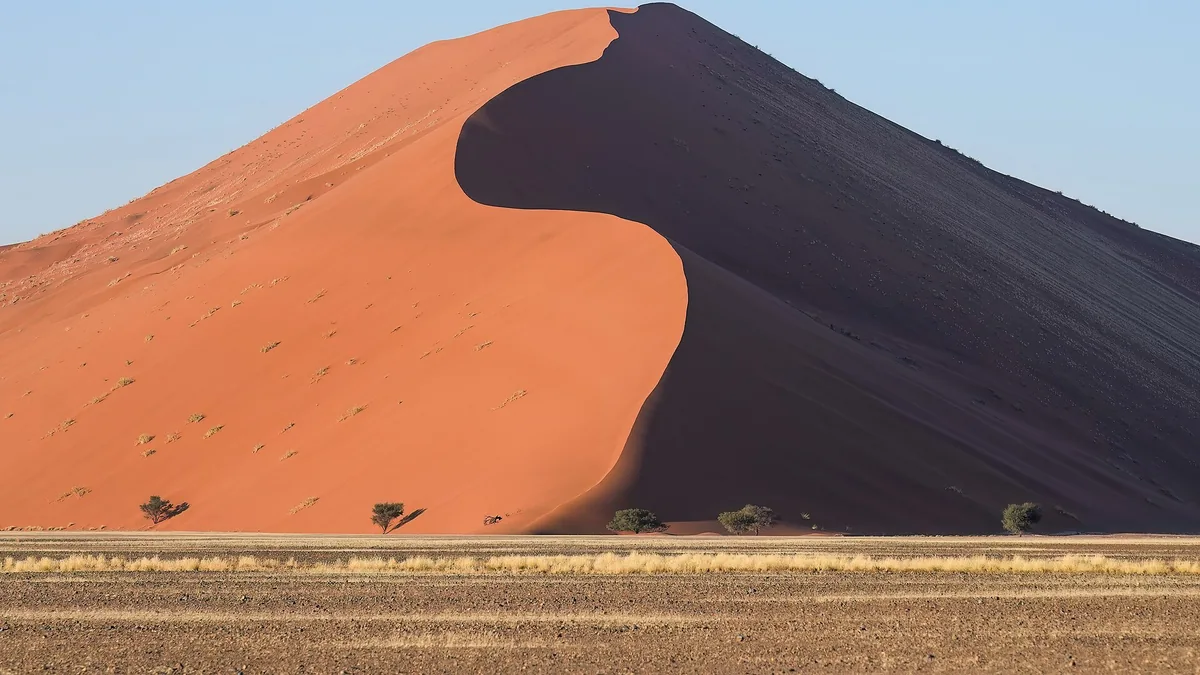
When most people imagine a desert, they picture endless golden dunes and scorching sun. But deserts are defined by low precipitation, not by sand or heat. That means some of the world's strangest deserts are cold, white, colorful, or even teeming with specially adapted life. Here are eight deserts that look nothing like a desert.
1. The Atacama Desert, Chile
The Atacama is the driest non-polar desert on Earth. Some parts have not seen measurable rain in recorded history. Instead of dunes, much of the Atacama is rocky, salt-crusted, and red, resembling the surface of Mars. NASA uses the region to test Mars rovers. During rare rainy years, the desert can explode into flower blooms, a phenomenon called desierto florido, when dormant seeds burst into color.
2. The White Desert, Egypt
The Sahara el Beyda, or White Desert, is filled with chalk-white rock formations sculpted by wind. The shapes resemble mushrooms, icebergs, and abstract sculptures. The white chalk contrasts with golden sand to create an almost dreamlike setting. The area lies near the Farafra Oasis and is protected as a national park, allowing camping under some of the clearest skies in the world.
3. Lençóis Maranhenses, Brazil
Technically a coastal dune field, Lençóis Maranhenses receives enough rain to be classified outside the strictest desert definitions, but the landscape is unforgettable. Rolling white dunes are interrupted by thousands of brilliant blue freshwater lagoons. The lagoons fill between January and June and slowly evaporate through the dry season. Walking between the dunes and lagoons feels more like visiting another planet than a desert.
4. The Gobi Desert, Mongolia
The Gobi is a cold desert where winter temperatures can drop below minus 40°C. Instead of endless sand, the Gobi is mostly bare rock, gravel plains, and steppe. It is home to Bactrian camels, snow leopards, and the famous Flaming Cliffs, where dinosaur fossils were first discovered. The mix of semi-arid grassland and mountains makes the Gobi one of the most varied deserts in the world.
5. Antarctica, the polar desert
Antarctica is technically the largest desert on Earth. It receives very little precipitation, but what falls stays as ice rather than soaking into the ground. Instead of sand, the landscape is a vast white expanse of ice and rock. The McMurdo Dry Valleys are so dry and wind-scoured that they are completely ice-free, creating a bare rock desert reminiscent of Mars.
6. The Danakil Depression, Ethiopia
The Danakil is one of the hottest and lowest places on Earth, sitting more than 100 meters below sea level. Rather than sand, it has vast salt plains, acid-yellow sulfur springs, and vivid mineral deposits. The colors of orange, yellow, and green create a landscape that looks more like a chemical plant than a desert. Hardy Afar salt miners still work here using traditional methods.
7. The Painted Desert, Arizona
The Painted Desert stretches across northern Arizona and is famous for its bands of red, orange, pink, and purple sedimentary rock. The colors come from iron and manganese compounds in the Chinle Formation, layered over millions of years. Rather than a flat wasteland, the Painted Desert offers mesas, buttes, and wide views that change color throughout the day. Parts of it lie within Petrified Forest National Park.
8. Iceland's cold highlands
Iceland's interior highlands are among the largest uninhabited areas in Europe. While not officially classified as a desert, they are dry, barren, and covered in black volcanic sand and ash. Glacial outwash plains create vast gray-black expanses broken by moss, rivers, and distant glaciers. The landscape feels primordial, which is why space agencies have used Iceland to train astronauts for lunar and Martian surfaces.
What defines a desert?
A desert is any region that receives very little precipitation, generally less than 250 millimeters per year. Temperature is irrelevant to the definition. That is why places as different as the Sahara, Antarctica, and the Atacama can all be deserts. What they share is dryness and the challenge it presents to life.
Life in unusual deserts
Deserts force life to adapt in extraordinary ways. Plants store water in thick stems or wait years as dormant seeds. Animals become nocturnal or extract moisture from food. Microbes in places like the Atacama and Antarctica survive with almost no water at all. These adaptations make deserts fascinating laboratories for understanding resilience and even the possibility of life on Mars.
Conclusion
Deserts are far more varied than the classic image of sand dunes. From the white chalk formations of Egypt to the blue lagoons of Brazil and the ice of Antarctica, the world's driest places are also some of its most surprising. The next time you imagine a desert, think beyond the sand and consider what else dryness can create.
Keep reading
Beyond Machu Picchu: 8 Inca Sites Almost Nobody Visits
Choquequirao, Wari terraces and fortress complexes that see a fraction of Machu Picchu's visitors. Where they are and what the hike involves.
Europe's Deepest Canyon Is Not Where You Think: The Tara River Gorge
The Tara River Canyon cuts deeper than most famous European gorges. How it formed, how it compares to the world's big canyons and how to see it.
New Zealand's Great Walks: The Four Almost Nobody Books
Most hikers book the Routeburn and Milford. These four Great Walks get a fraction of the traffic with the same alpine and coastal scenery.
