
Natural Wonders
The Blood Falls of Antarctica: Explained
Key takeaways
- The red color is iron oxidizing, essentially rust, not algae.
- The source is an ancient brine pool sealed beneath the glacier for over a million years.
- Bacteria there survive without sunlight or oxygen, metabolizing iron and sulfur.
- The site is a key analog for possible life on Mars and icy moons.
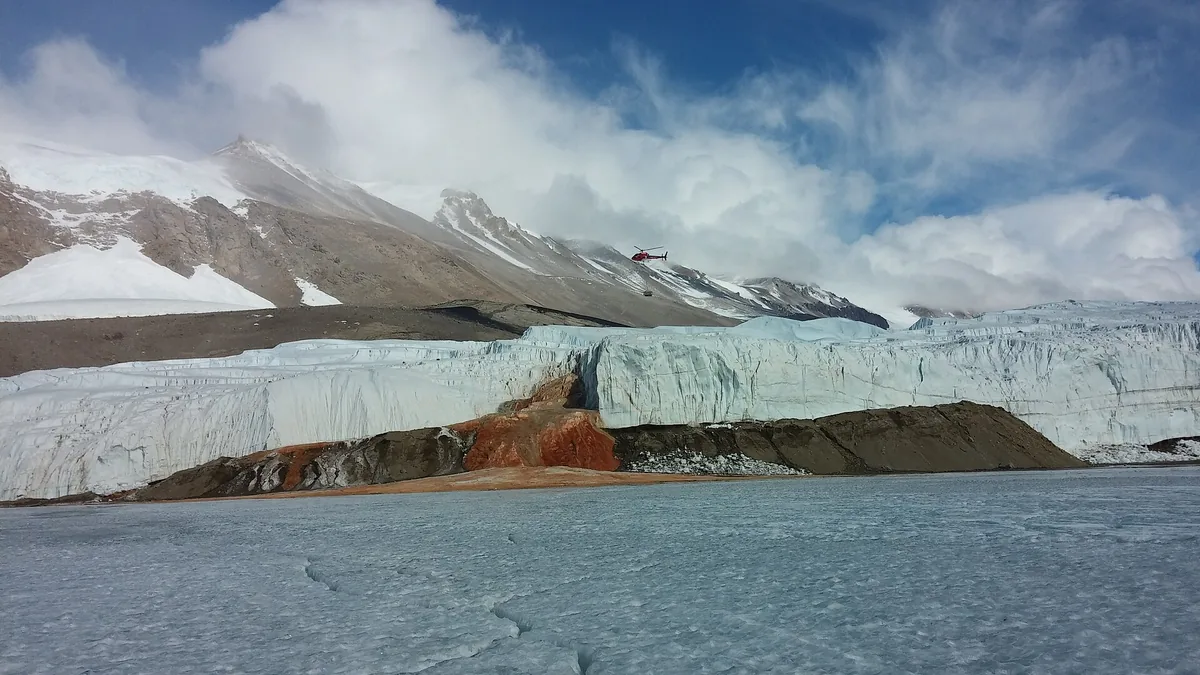
One of the strangest sights in Antarctica is a waterfall that appears to bleed. Blood Falls pours a deep red liquid from the snout of the Taylor Glacier into Lake Bonney below. For nearly a century, scientists debated what caused the color. The answer turned out to be more fascinating than anyone expected and has important implications for the search for life beyond Earth.
Where is Blood Falls?
Blood Falls is located in the McMurdo Dry Valleys of East Antarctica, one of the driest and coldest places on the planet. The Taylor Glacier is a massive river of ice that flows from the polar plateau. At its terminus, a rust-colored stream seeps out and stains the ice and the salty Lake Bonney below. The Dry Valleys are ice-free because powerful katabatic winds sweep away snow, creating a barren landscape that resembles the surface of Mars.
Early theories about the red color
When the Australian geologist Griffith Taylor first described the site in 1911, he believed the red color came from red algae living in the water. This theory persisted for decades. The idea made intuitive sense: some algae do produce red pigments, and the Dry Valleys host extremophile life. However, as the site was studied more closely, the algae theory failed to explain the chemistry.
The real answer: iron oxidation
We now know the red color comes from iron. Beneath the Taylor Glacier lies a subglacial brine pool that has been sealed off from the atmosphere and from sunlight for over a million years. This ancient water is extremely salty, which keeps it liquid far below freezing. As the brine flows through the bedrock, it dissolves iron from the rock. When the iron-rich water finally reaches the surface at Blood Falls and comes into contact with oxygen, it oxidizes. In simple terms, it rusts. The same process that creates orange rust on an old nail produces the blood-red color here.
Life in an extreme environment
The most remarkable discovery is that life survives in this subglacial brine. The water is salty, iron-rich, has no oxygen, and sits in permanent darkness at sub-zero temperatures. Scientists have identified a community of bacteria that metabolize sulfur and iron instead of relying on sunlight or organic carbon. This is an entirely different way of living, one that does not depend on the sun at all.
Why this matters for space exploration
The Blood Falls ecosystem is one of the best analogs on Earth for what life might look like on other worlds. Mars has iron-rich rocks and evidence of ancient salty water. Moons like Europa and Enceladus have subsurface oceans that are dark, cold, and isolated from the sun. If bacteria can thrive in a sealed Antarctic brine pool for a million years, similar life could potentially exist in those environments. This is why astrobiologists study Blood Falls so closely.
How scientists study the site
Because the subglacial water is sealed beneath hundreds of meters of ice, studying it directly is difficult. Researchers have used ice-penetrating radar to map the brine beneath the glacier and have analyzed samples from the outflow at Blood Falls. Every sample must be collected carefully to avoid contaminating this pristine environment. Antarctica's protected status means access is tightly controlled.
Visiting and protecting Antarctica
Few people ever see Blood Falls in person. The Dry Valleys are remote, and access is limited to scientific and carefully managed expedition groups. The Antarctic Treaty restricts activity to protect the fragile environment. Even the footprints of visitors can persist for decades in this cold, dry desert. Anyone who does visit must follow strict biosecurity protocols to avoid introducing microbes from outside.
Conclusion
Blood Falls is a reminder that nature still holds surprises. A waterfall that looks like blood is really a rusting stream fed by an ancient, isolated ecosystem. It shows that life can survive in conditions we once thought impossible and hints at what we might find beneath the ice of other worlds. Strange, beautiful, and scientifically priceless, Blood Falls deserves its reputation as one of Antarctica's most fascinating landmarks.
Keep reading
Beyond Machu Picchu: 8 Inca Sites Almost Nobody Visits
Choquequirao, Wari terraces and fortress complexes that see a fraction of Machu Picchu's visitors. Where they are and what the hike involves.
Europe's Deepest Canyon Is Not Where You Think: The Tara River Gorge
The Tara River Canyon cuts deeper than most famous European gorges. How it formed, how it compares to the world's big canyons and how to see it.
New Zealand's Great Walks: The Four Almost Nobody Books
Most hikers book the Routeburn and Milford. These four Great Walks get a fraction of the traffic with the same alpine and coastal scenery.
