
Natural Wonders
The Lakes That Vanish Every Year and Come Back: Seasonal Lakes Explained
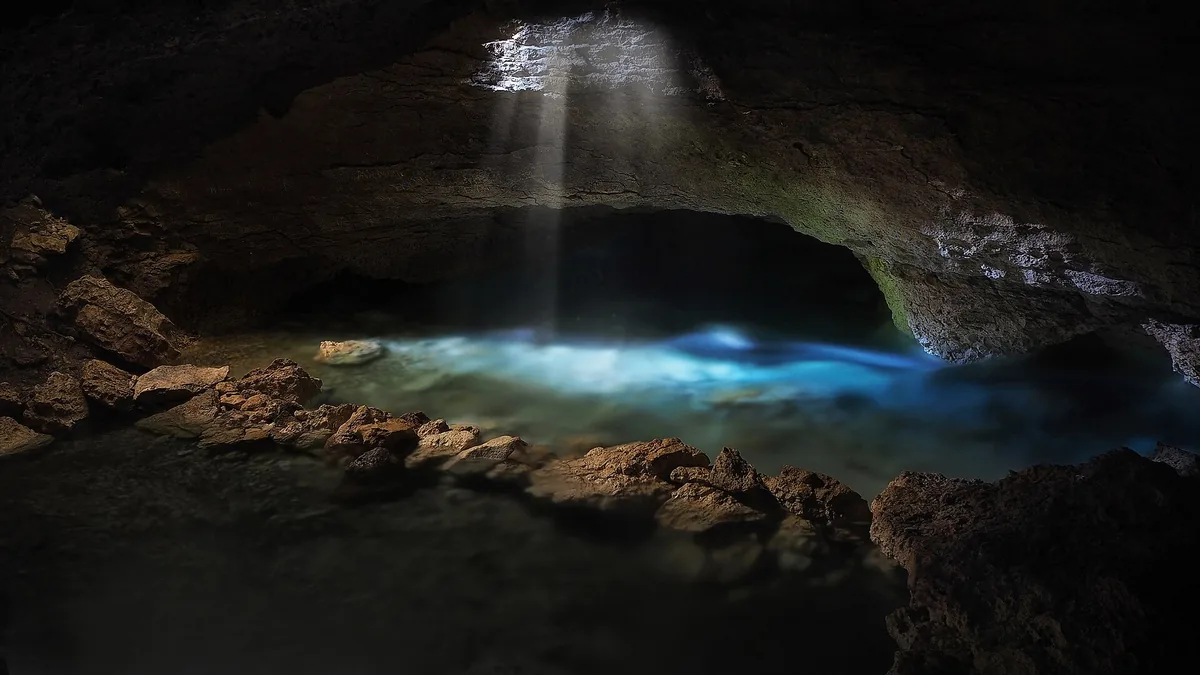
Key takeaways
- Karst lakes drain through underground passages that act as natural plugs.
- Glacial outburst lakes fill and empty on a meltwater schedule tied to the season.
- Endorheic basins lose water to evaporation alone, which is why they flip between lake and flat.
- A lake that disappears is usually part of a much larger underground water system.
A lake that empties and refills on a schedule sounds like folklore, and there are several places on earth where it is simply what happens. The water does not evaporate mysteriously; it drains through openings in the lake bed, or it arrives in a pulse and then disappears again. Each mechanism is well understood, each produces a different kind of seasonal lake, and several of them are visible enough that you can stand on dry ground one month and swim in the same spot a few months later.
Three different kinds of disappearing lake
The word hides three unrelated phenomena. A karst lake drains through the soluble rock beneath it. A glacial outburst lake fills when meltwater is dammed and empties when the dam releases. An endorheic basin lake loses water only to evaporation, so its level tracks the balance between inflow and heat rather than draining through anything.
They look similar from the shore and behave completely differently. A karst lake can drop in days, because it is draining through a conduit. A glacial lake typically drops fast and dramatically, because an ice or moraine dam has failed. An endorheic lake changes slowly over a season, and in dry years may not appear at all.
Understanding which one you are looking at tells you what to expect. Only the first two are genuinely dramatic on a human timescale; the third is a slow annual cycle that mostly matters to the ecology and to anyone who has built something near the shoreline.
Karst lakes: the plug that pulls itself
Limestone dissolves in slightly acidic water. Rainwater absorbs carbon dioxide from the atmosphere and from soil, becomes weakly acidic, and then works along fractures in the rock for thousands of years, widening them into passages and eventually into caves. This is karst, and it underlies a significant portion of the earth's land surface.
A karst lake sits in a depression above that system. The bed contains openings called swallow holes or ponors, and water drains into them continuously. Whether a lake exists at all depends on a balance: how fast water flows in versus how fast the openings can take it away.
The seasonal part comes from that balance shifting. In the dry season, inflow drops below what the swallow holes can carry, and the basin empties. When the rains return, inflow exceeds drainage capacity, the openings cannot keep up, and the water level rises until a lake exists again. The lake is not really a lake in the conventional sense — it is a temporary surface expression of a much larger underground river.
Sediment matters as much as water. Debris carried in during high flow can plug the openings, which is why some basins hold water for years and then drain suddenly once the plug clears. This is the mechanism behind the dramatic cases, and it is also why timing a visit can be genuinely unpredictable.
Glacial outburst lakes: filling until the dam gives
Where a glacier or a moraine blocks a valley, meltwater backs up behind it and forms a lake. The dam is made of ice or of loose rock and debris, and neither is engineered to hold water permanently.
When the water level rises high enough, it finds a way over or through. Ice dams float, which lets water escape underneath; moraine dams are permeable and can be overtopped and then rapidly incised. Either way the release can be sudden, and the volume involved is large enough to produce a genuine flood downstream.
These events are known by their Icelandic name, and they are a recognised hazard in every glaciated mountain region. Some occur annually and are monitored; some occur once and then never again, because the drainage route that opened stays open.
After the release, the basin may hold water again, or it may stay empty if the new outlet remains. This is why some glacial lakes are seasonal features and others are former lakes that now only fill partially.
Endorheic basins: evaporation as the only exit
An endorheic basin has no outflow to the sea. Water enters from rivers and streams and leaves only by evaporation, which means everything dissolved in it stays behind. Over long periods this makes such lakes saline, and it makes their levels extremely sensitive to the balance between inflow and evaporation.
These lakes fluctuate seasonally and over much longer cycles. A lake of this kind can be large in a wet decade and a salt flat in a dry one, and human diversion of inflowing rivers has permanently shrunk several of them. The seasonal part is the annual rise and fall; the dramatic part is the multi-year trend.
Their ecology is specialised, because anything living in them has to tolerate both changing volume and changing salinity. Brine shrimp, salt-tolerant algae and the bird populations that depend on them are the characteristic community.
Cenotes and collapse sinkholes
Not every water-filled hole is a disappearing lake, but the related family is worth understanding. Where a karst cave roof collapses, the result is an open sinkhole that exposes the water table below. Collapse features like these are windows into the same underground systems that drain seasonal lakes.
They do not typically empty and refill; the water in them is groundwater, and it is present year-round. What changes is the water level, which tracks the regional water table and therefore the seasons. In regions with pronounced wet and dry seasons, the difference in level within a single sinkhole can be several metres.
These features connect to the same underground drainage, which is why pollution at the surface travels so far and so quickly in karst country. There is no filtration in a cave passage.
Why a disappearing lake is not just a curiosity
A lake that drains through the ground is direct evidence of an underground river system, and that system is usually someone's drinking water. Karst aquifers supply a large share of the world's fresh water, and they are among the most vulnerable to contamination precisely because water moves through them fast and unfiltered.
Seasonal lakes also support distinctive ecology. Species that colonise a temporary water body have to complete their life cycle within the wet phase, and the dry phase is part of the habitat rather than a disruption of it. Draining or permanently flooding such a lake destroys the community rather than improving it.
The flood risk is the third thing. A basin that fills and then releases into an underground system can contribute to downstream flooding in ways that are not obvious from the surface, and glacial outburst floods are a serious hazard that mountain communities actively monitor. Reading the landscape correctly is a safety matter, not just an interesting observation.
How to tell what you are looking at
Look at the basin edge first. A karst basin typically has a visible low point or a distinct depression where water leaves, sometimes marked by a ring of sediment stripped of vegetation. A glacial basin is often dammed at one end by an obvious ridge of debris or by ice itself. An endorheic basin has no outlet at any point around its perimeter.
Look at the water colour and the shoreline. A lake that has been at a stable level for a long time has a developed shoreline — beaches, vegetation zones, wave-cut features. A lake that fluctuates has a bare, often cracked margin with a clear high-water line and vegetation that stops abruptly.
Look at what is around. Karst landscapes have sinkholes, dry valleys, few surface streams and distinctive rough limestone pavement underfoot. Glacial landscapes have moraines, erratic boulders and U-shaped valleys. Recognising the terrain around the lake tells you the mechanism before you look at the water at all.
Conclusion
A lake that vanishes is not mysterious; it is a lake whose outflow happens to be underground, or dammed, or simply evaporative. Karst basins drain through swallow holes and refill when inflow outruns drainage, which is why their timing is genuinely hard to predict. Glacial lakes fill behind ice or debris and release when the dam gives way, sometimes catastrophically. Endorheic basins breathe with the balance between inflow and evaporation. Learn to read the basin edge, the shoreline and the surrounding terrain, and you can identify which one you are standing next to — and understand the underground river, the flood hazard or the water supply that it represents.
Keep reading
Beyond Machu Picchu: 8 Inca Sites Almost Nobody Visits
Choquequirao, Wari terraces and fortress complexes that see a fraction of Machu Picchu's visitors. Where they are and what the hike involves.
Europe's Deepest Canyon Is Not Where You Think: The Tara River Gorge
The Tara River Canyon cuts deeper than most famous European gorges. How it formed, how it compares to the world's big canyons and how to see it.
New Zealand's Great Walks: The Four Almost Nobody Books
Most hikers book the Routeburn and Milford. These four Great Walks get a fraction of the traffic with the same alpine and coastal scenery.
