
Natural Wonders
12 Places on Earth That Look Like Another Planet
Key takeaways
- Scientists use these landscapes as analogs for Mars and other worlds.
- Extreme environments on Earth reveal how life survives in harsh conditions.
- The Atacama and Antarctica's Dry Valleys are among the most Mars-like places.
- Visit responsibly: many of these sites are fragile and remote.
You do not need a rocket to visit another world. Earth contains landscapes so strange that scientists use them to prepare for missions to Mars and to study how life might survive on other planets. Here are twelve places on Earth that look like another planet.
1. Danakil Depression, Ethiopia
The Danakil Depression is one of the hottest places on Earth, with temperatures regularly exceeding 45°C. Acid-yellow sulfur pools, bright orange salt crusts, and green hydrothermal springs create an extraterrestrial palette. Volcanic activity and evaporation built this landscape over millennia. It looks like a scene from a science fiction film, and the Afar people who live here have adapted to conditions that would break most visitors.
2. Salar de Uyuni, Bolivia
Salar de Uyuni is the largest salt flat in the world. During the rainy season, a thin layer of water turns it into a perfect mirror that reflects the sky, making it nearly impossible to tell where the ground ends and the horizon begins. In the dry season, the flat white expanse stretches endlessly in every direction. It is one of the most surreal places on the planet and a favorite for photographers.
3. The Atacama Desert, Chile
The Atacama is the driest non-polar desert in the world. Some weather stations have never recorded a single drop of rain. The landscape of red rock, salt basins, and volcanic peaks resembles the surface of Mars so closely that NASA uses it to test rovers and instruments. The lack of humidity also makes it one of the best places on Earth for stargazing.
4. The Gates of Hell, Turkmenistan
The Darvaza gas crater, known locally as the Gates of Hell, is a burning crater in the Karakum Desert that has been on fire continuously since 1971. The crater glows orange against the black desert at night, creating a sight that looks like a portal to another world. Soviet geologists ignited it to burn off escaping natural gas, expecting it to burn out in weeks. It has not stopped since.
5. Antarctica's Dry Valleys
The McMurdo Dry Valleys are the largest ice-free region in Antarctica. Katabatic winds scour away snow and ice, leaving bare rock and gravel that resemble Martian terrain. The extreme cold, dryness, and isolation have made the valleys a key site for studying how life survives in the harshest conditions. Blood Falls, with its rust-red flow, adds to the otherworldly atmosphere.
6. Río Tinto, Spain
Río Tinto's red, acidic water and rust-colored rocks look like something alien. The river's extreme chemistry, with high levels of iron and heavy metals, creates conditions that most life cannot tolerate. Scientists study the extremophile microorganisms living there to understand how life might survive on Mars, which has similar iron-rich geology.
7. Lake Natron, Tanzania
Lake Natron is a highly alkaline lake whose water can reach a pH of 10.5. Its surface often glows red from salt-loving microorganisms. The lake is so caustic that animals that die in it can become calcified, preserved in eerie statues. Greater flamingos, however, thrive in the harsh conditions and use the lake as a breeding ground. The reflective, reddish water looks like the surface of a distant world.
8. Socotra Island, Yemen
Socotra is one of the most isolated landmasses on Earth, and its isolation has produced plants found nowhere else. The dragon's blood tree, with its umbrella-shaped canopy and red resin, looks like something from a fantasy film. About a third of the island's plant species are endemic. The island's unique biology has earned it UNESCO World Heritage status.
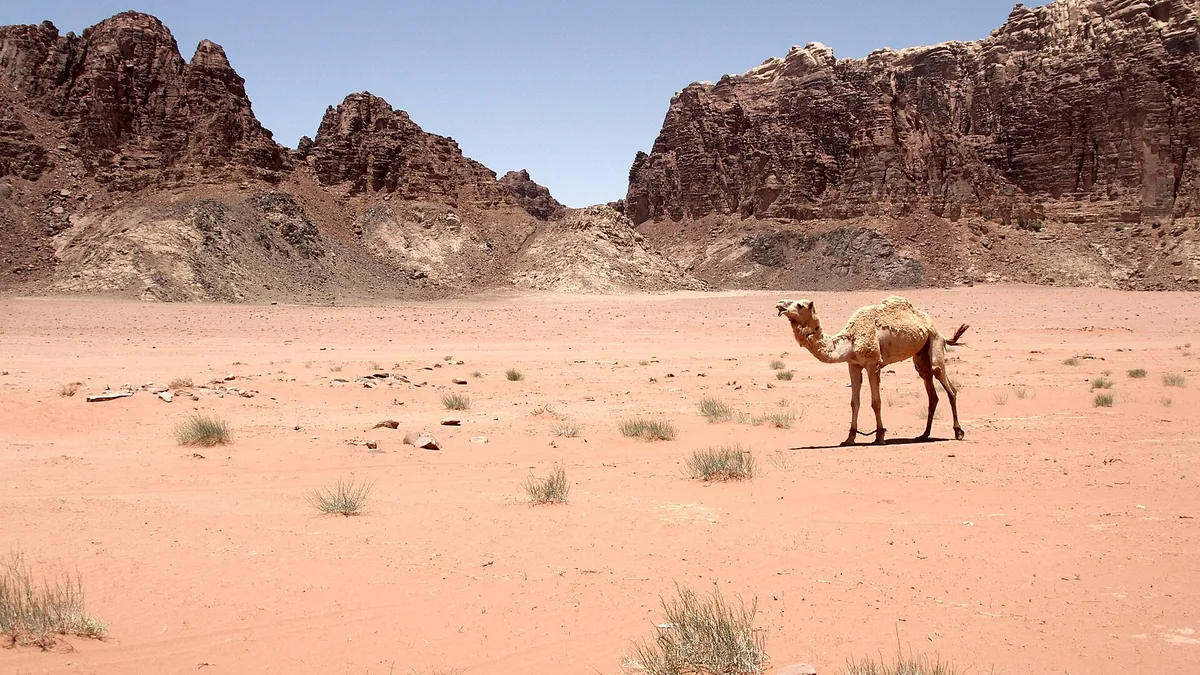
9. Wadi Rum, Jordan
Wadi Rum's red sandstone mountains rise abruptly from pink desert sand. The dramatic landscape has doubled as Mars in several films, including The Martian and Star Wars. Erosion carved the rock into arches, towers, and canyons. Bedouin communities live in the area, offering guides, camps, and a window into a desert culture thousands of years old.
10. Lençóis Maranhenses, Brazil
Lençóis Maranhenses is a vast expanse of rolling white sand dunes interrupted by thousands of bright blue rainwater lagoons. The lagoons form during the rainy season and evaporate in the dry months. The contrast between the white dunes and turquoise pools creates a landscape that feels both tropical and alien. The best time to see the lagoons full is from June to September.
11. Zhangye Danxia, China
The rainbow mountains of Zhangye are striped in vivid layers of red, orange, yellow, and gray. The colors come from mineral deposits laid down over millions of years and exposed by tectonic uplift. The swirling patterns look almost painted. Sunrise and sunset bring out the most intense colors, making it one of the most photographed geological formations in Asia.
12. Iceland's black sand deserts
Iceland's volcanic activity has created vast black sand deserts that look more like the surface of a moon than a country on Earth. Glacial rivers carry fine volcanic ash to the coast, where it forms black beaches and dunes. Combined with glaciers, geothermal fields, and lava formations, the Icelandic landscape is one of the best analogues we have for other planetary surfaces.
Why these places matter
These landscapes are more than tourist attractions. Scientists use them as analogues for Mars, Europa, and other worlds. By studying how life survives in extreme environments on Earth, researchers learn what to look for elsewhere in the universe. Visiting them also builds appreciation for how varied and resilient our own planet is.
Conclusion
From burning craters to mirror-like salt flats, Earth is full of landscapes that feel extraterrestrial. These twelve places offer a chance to experience another world without leaving this one. Visit responsibly, respect local communities, and let the strangeness of these places remind you how much there is left to explore.
Keep reading
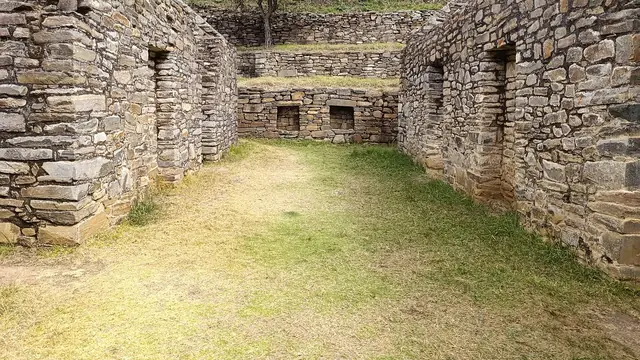
Beyond Machu Picchu: 8 Inca Sites Almost Nobody Visits
Choquequirao, Wari terraces and fortress complexes that see a fraction of Machu Picchu's visitors. Where they are and what the hike involves.
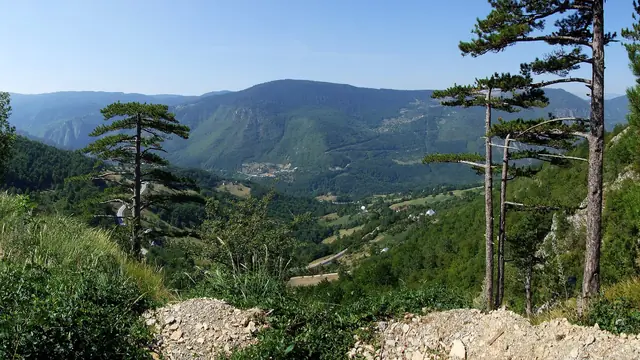
Europe's Deepest Canyon Is Not Where You Think: The Tara River Gorge
The Tara River Canyon cuts deeper than most famous European gorges. How it formed, how it compares to the world's big canyons and how to see it.
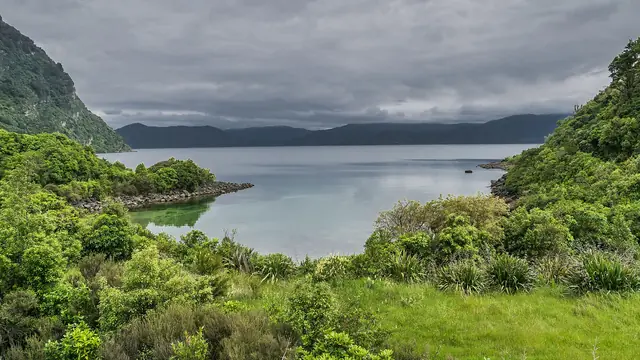
New Zealand's Great Walks: The Four Almost Nobody Books
Most hikers book the Routeburn and Milford. These four Great Walks get a fraction of the traffic with the same alpine and coastal scenery.
