
Safety
What Happens If You Get Lost in the Amazon Rainforest?
Key takeaways
- Panic is the biggest early danger: stop, think, observe, and plan.
- Prioritize water and shelter; food is a much lower priority.
- Stay near rivers, since rescuers search along waterways.
- Never hike the Amazon without a licensed local guide.
The Amazon is one of the most celebrated and feared places on Earth. Losing your way in the rainforest is a scenario that has inspired countless survival stories. Understanding what actually happens, how to react, and how to survive can mean the difference between a harrowing story and a tragedy. This is what happens if you get lost in the Amazon rainforest.
Why the Amazon is so disorienting
The Amazon confuses the senses. The canopy blocks the sun for most of the day, making it difficult to judge direction from shadows. The undergrowth closes in within meters, and there are few landmarks that look distinct from each other. Sound carries strangely through dense, humid air. Trails that locals use are often barely visible to outsiders. GPS signals can be unreliable under thick canopy. All of this means that losing the trail happens easily, and realizing you are lost often comes too late.
The first hours: panic is the real danger
The first thing that happens when people realize they are lost is often panic. Panic leads to running, which leads to dehydration, injury, and getting even further from the trail. The correct first response is simple but hard to follow: stop. Sit down. Breathe. Assess what you have with you. Panic is more immediately dangerous than most of the animals or hazards in the forest.
The S.T.O.P. principle
Survival training teaches a simple framework. S stands for Stop. T stands for Think about how you got here and what resources you have. O stands for Observe your surroundings, including water sources, shelter options, and any sign of human activity. P stands for Plan your next move. This principle applies everywhere, but it is especially valuable in the Amazon, where movement without a plan burns energy and water fast.
Finding water
Water usually becomes the priority within a few hours. In the Amazon, water is abundant but rarely safe to drink untreated. Rivers carry sediment, bacteria, and parasites. Rainwater collected in broad leaves is safer. Water collected from vines should be treated with caution, as some vines contain irritants. If possible, boil water for at least one minute or use a filter. Dehydration impairs judgment, which makes every other survival task harder.
Shelter and fire
Night in the Amazon brings insects, rain, and temperatures that feel colder than expected when you are wet. Build a simple lean-to using branches and broad leaves to stay off the wet ground. Fire is difficult in the humid forest; much of the wood is damp, and the bark of some trees holds water. Dry material from the inside of dead standing wood works best. Fire helps morale, dries clothes, and signals rescuers.
Food in the rainforest
Food is a lower priority than water and shelter. A healthy person can go for many days without eating. The greater risk is eating something poisonous. Do not eat unfamiliar berries, mushrooms, or plants unless you can confidently identify them. Insects like grubs and termites are generally safer protein sources if cooked. Fishing is possible if you have line or can fashion a simple hook and spear.
The dangerous animals are rarely the problem
Popular imagination fills the Amazon with deadly predators. In reality, large predators rarely see humans as prey. The more common dangers are smaller. Venomous snakes like the fer-de-lance and bushmaster are a real risk, so watch your step and never reach blindly into dense vegetation. Insects carry disease. Leishmaniasis, contracted from sandflies, and malaria are genuine concerns. Treat clothing with permethrin and use insect repellent.
Signaling for rescue
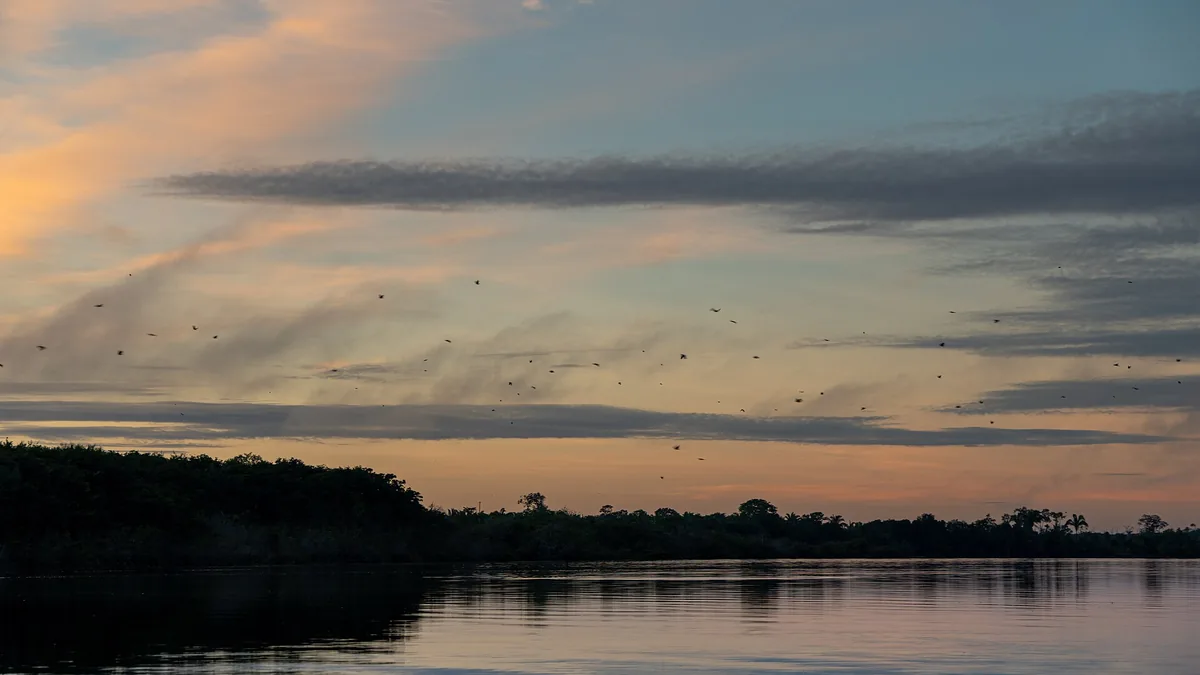
Your best chance of rescue is staying near a water source, as rivers are the highways of the Amazon and rescuers search along them. Create visible signals: cut vegetation into clear geometric shapes, lay out bright clothing, and build smoky fires. A mirror or shiny surface can catch the eye of a passing plane or boat. Three of anything is the international distress signal, so three fires in a triangle, three whistle blasts, or three piles of marked vegetation all communicate emergency.
How to avoid getting lost in the first place
Prevention is far easier than survival. Never hike in the Amazon alone or without a licensed local guide. Register your route with local authorities or your lodge. Carry a satellite communicator or GPS device. Tell someone your exact plan and return time. Bring more water and purification supplies than you think you need. The vast majority of serious incidents involve people who went in underprepared or ignored local advice.
Conclusion
Getting lost in the Amazon is survivable, but it rewards calm and punishes panic. Stop, assess, find water, build shelter, and stay near a river to maximize your chances of rescue. Better still, travel with experienced guides and the right equipment so the situation never arises. The Amazon is magnificent, and the best way to enjoy it is to prepare properly and respect its power.
Keep reading
Cave Diving: Why It Kills Divers Who Did Everything Right
Cave diving has a fatality profile unlike any other adventure sport. Silt-outs, line breaks, gas planning and the training that separates survivors from statistics.
What Happens to Your Body Above 8,000 Meters: The Death Zone, Explained
Above 8,000 meters the body cannot acclimatize. What happens to blood, brain and muscles hour by hour, and why climbers still go.
Your Vehicle Breaks Down in the Desert: A Survival Checklist That Works
Stay with the vehicle, manage water, signal properly. What to carry and what to do hour by hour when a breakdown happens far from help.
