
Safety
5 Extreme Caves Only Expert Divers Can Enter
Key takeaways
- Cave diving has no direct ascent to the surface, so mistakes are often fatal.
- Proper certification, redundant equipment, and gas planning are mandatory.
- The rule of thirds governs gas: one third in, one third out, one third reserve.
- Never enter an overhead environment without cave-specific training.
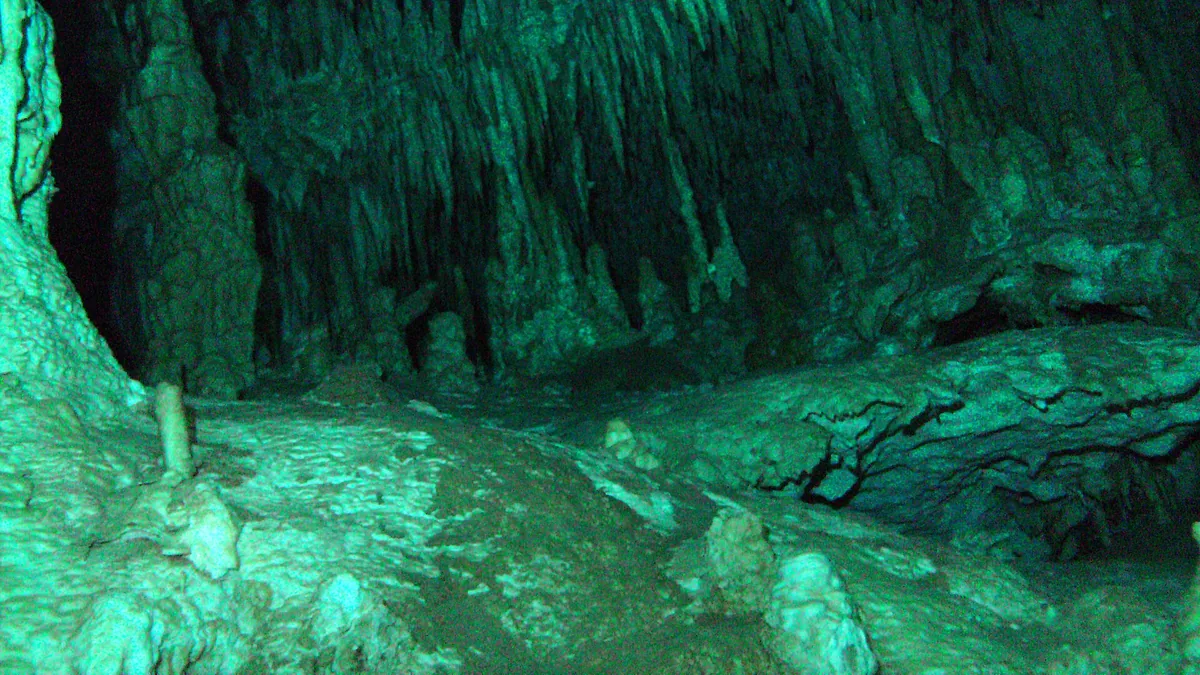
Beneath the surface of the Earth lies a world that very few people will ever see. Cave diving is widely considered one of the most dangerous activities in the world. Overhead environments, zero visibility, complex navigation, and no direct access to the surface mean that mistakes are almost always fatal. These five caves are among the most extreme and are only for expert divers with specialized training and equipment.
Why cave diving is so dangerous
Open water diving allows a diver to ascend directly to the surface in an emergency. Cave diving does not. An overhead environment means you cannot go up if something goes wrong; you must find your way out through passages that may be narrow, silted, and completely dark. Add complex navigation, limited gas supply, and the risk of equipment failure, and the margin for error becomes very small. This is why cave diving requires dedicated certification, redundant equipment, and extensive training.
1. Dean's Blue Hole, Bahamas
Dean's Blue Hole is the deepest known blue hole in the world, plunging 202 meters. While freedivers and technical scuba divers are drawn to its depths, the deeper sections pass into anoxic, oxygen-free water surrounded by an overhead limestone environment. The transition into the hydrogen sulfide layer is dramatic and dangerous. Reaching the deepest sections requires technical trimix training, multiple gas switches, and a full support team. It is not accessible to recreational divers.
2. The Sac Actun System, Mexico
The Sac Actun system in the Yucatán Peninsula is one of the longest underwater cave systems on Earth, stretching for hundreds of kilometers. The cenote entrances are beautiful and accessible, but penetrating deep into the system requires full cave diver certification. The passages include haloclines, where fresh and salt water meet, creating shimmering visual distortion. Navigational errors here have been fatal, and even experienced divers rely on continuous guideline and careful gas planning.
3. Eagle's Nest Sinkhole, Florida, USA
Eagle's Nest in Florida is known among cave divers as one of the most dangerous sites in the world. The sinkhole leads to a large, deep chamber and a complex maze of passages extending far back from the entrance. Divers must manage multiple levels, restrictions, and significant decompression obligations. Despite warning signs, a number of fatalities have occurred here among divers who entered without proper cave training or gas planning. It is a stark reminder that beauty and danger often sit side by side.
4. Busalah Cave, Oman
Busalah Cave in Oman is one of the most recently explored deep cave systems in the world. Exploration here has reached depths beyond 100 meters through a series of shafts and chambers. The water is crystal clear, which is deceptive, because the depth and overhead environment create serious decompression and gas management challenges. Exploration dives use rebreathers, scooters, and extensive support. The cave is remote, and rescue is effectively impossible in the deeper sections.
5. Boesmansgat, South Africa
Boesmansgat, also known as Bushman's Hole, is a deep freshwater cave in South Africa. Its bottom lies close to 280 meters below the surface, although the altitude of the site adds significant decompression complexity. The water is exceptionally clear, and the sinkhole drops dramatically into a large chamber. Very few divers have ever reached the bottom. Record dives here require years of preparation, enormous gas logistics, and a large support team. It is one of the most formidable cave dives on the planet.
What training is required?
Cave diving progression typically begins with open water certification, then advanced and rescue training, followed by technical decompression training, and finally dedicated cave diver certification from agencies such as GUE, TDI, or IANTD. Cave training covers guideline use, gas management, propulsion techniques to avoid silting, emergency procedures, and team protocols. Most experts recommend hundreds of dives before attempting any overhead environment.
Essential equipment for cave diving
Cave diving requires redundancy. Divers carry twin cylinders or sidemount configurations with independent regulators, at least three lights, a primary reel and safety spool, a continuous guideline to the exit, dive computers, and often a dry suit for thermal protection. Gas planning follows the rule of thirds, using one third for the way in, one third for the way out, and one third in reserve. Nothing is left to chance.
Why people do it
Despite the danger, cave divers describe an experience unlike anything else. These are places where the rock has never been touched by sunlight, where water clarity can be absolute, and where the sense of exploration is genuine. Many cave divers contribute to scientific research, mapping aquifers and studying water systems. For them, the risk is balanced by discovery, discipline, and the deep satisfaction of mastering an extreme environment.
Conclusion
Extreme caves are not destinations; they are expeditions. Dean's Blue Hole, Sac Actun, Eagle's Nest, Busalah, and Boesmansgat all demand elite training, redundant equipment, and a disciplined team. If you are drawn to cave diving, pursue proper certification, build experience gradually, and respect the rule that no dive is worth your life. The caves will still be there when you are genuinely ready.
Keep reading
Cave Diving: Why It Kills Divers Who Did Everything Right
Cave diving has a fatality profile unlike any other adventure sport. Silt-outs, line breaks, gas planning and the training that separates survivors from statistics.
What Happens to Your Body Above 8,000 Meters: The Death Zone, Explained
Above 8,000 meters the body cannot acclimatize. What happens to blood, brain and muscles hour by hour, and why climbers still go.
Your Vehicle Breaks Down in the Desert: A Survival Checklist That Works
Stay with the vehicle, manage water, signal properly. What to carry and what to do hour by hour when a breakdown happens far from help.
