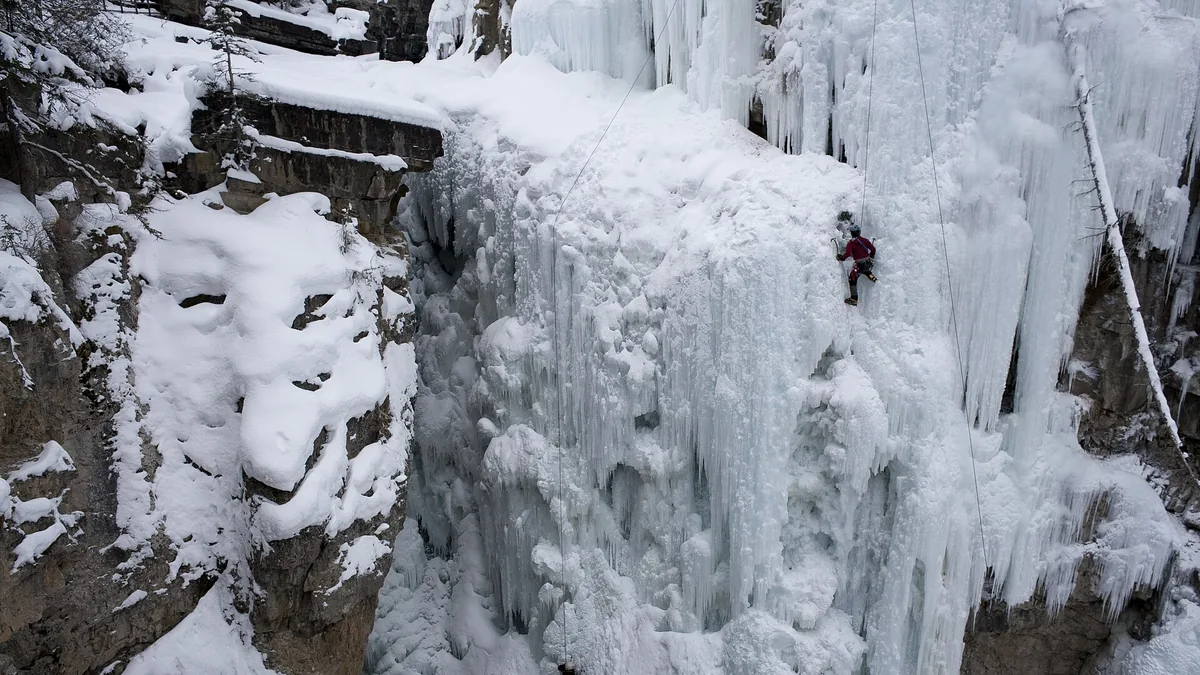
Climbing a material that changes its character every hour of the day.
Photo: Wilson Hui from Calgary, Canada / CC BY 2.0 · Wikimedia Commons
Ice climbing and snow travel are the most technically demanding activities covered here, and the ones where conditions matter most. Ice that takes a clean screw placement at 7 am can be running with water by noon and shed a sheet of it in the afternoon. Reading that change is the core skill, and it is learned from a guide rather than from a book.
Getting started
What to do first, in the order that matters.
Take a guided course. Every competent ice climber learned from someone, and the feedback loop is essential.
Practise winter hillwalking first: crampon technique, ice axe arrest, and moving efficiently in layers.
Learn self-arrest on a gentle slope with a good runout before you need it on a steep one.
Understand avalanche terrain. Most winter mountaineering accidents in snow are avalanche incidents, not falls.
Start on top-roped ice at a known crag, not on a route.
Gear checklist
The items that genuinely earn their weight.
Mountaineering boots stiff enough to take a crampon
Crampons correctly fitted to those specific boots, checked before every trip
Technical ice axes sized for your height and the terrain
Harness, helmet, rope and ice screws
Belay and abseil devices rated for cold, wet ropes
Avalanche transceiver, probe and shovel — plus the training to use them in under five minutes
Goggles and a balaclava: spindrift and falling ice are constant
Insulated gloves with a spare pair, because wet gloves end the day
Safety notes
What actually goes wrong.
Check the avalanche forecast for the specific aspect and elevation you plan to be on, every single day.
Carry a transceiver, probe and shovel, and know how to use them as a team. Equipment without practice is decoration.
Watch the temperature. Rising temperature through the day is the single strongest predictor of ice and snow instability.
Never climb below another party without a helmet and an explicit agreement about what they will drop.
Have a turnaround time based on the freeze, not on how the climbing is going.
Common mistakes
The ones we see repeated most often.
Climbing in the afternoon when the ice has been in the sun all day
Travelling in avalanche terrain without carrying and knowing how to use rescue gear
Wearing too many layers on the approach and soaking the base layer in sweat
Not checking crampon fit on the boots you are actually wearing
Roping up on a glacier without practising crevasse rescue first
Treating a guided trip as equivalent to independent competence
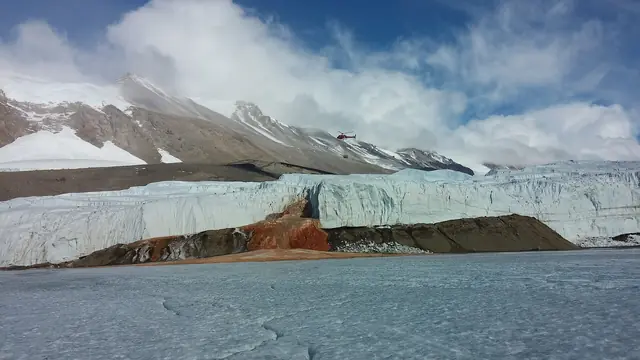
Why does Antarctica's Blood Falls bleed red? The science behind the rust-colored waterfall, the ancient subglacial brine, and what it means for life on other planets.