8 Deserts That Look Nothing Like a Desert
Deserts are defined by dryness, not sand. Explore eight deserts that look nothing like a desert, from Egypt's White Desert to Antarctica and Brazil's dune lagoons.
Defined by water they do not have — which is why so few of them look like sand.
A desert is defined by precipitation, not by appearance or temperature. Anything receiving under 250 mm a year qualifies, which is why Antarctica, the driest place on earth, is technically a polar desert and covers more desert area than the Sahara. Sand dunes — the image everyone has — cover only about a fifth of the world's desert area. The rest is rock, gravel, salt pan, ice, and in some cases, briefly, flowers.
The mechanism, without the jargon.
Shoulder seasons wherever you go. In hot deserts that means spring and autumn; in cold deserts like the Gobi, it means summer, because winter routinely drops below −30 °C. Night-time temperature swings of 25 °C or more are normal in dry air, at any latitude.
Distances are the defining logistics. Fuel, water and phone signal all disappear at the same time, and the nearest help is often measured in hundreds of kilometres. Drive with two spare tyres, carry far more water than you think you need, and never leave a vehicle if it breaks down.
Large desert national parks charge entry or conservation fees; many desert regions have no ticketing at all. Guided expeditions are the standard product and are generally worth the cost for a first visit.
Five worth building a trip around.
Chile
The driest non-polar desert on earth. Some weather stations have never recorded rainfall, and the soil chemistry is used to calibrate Mars rovers.
North Africa
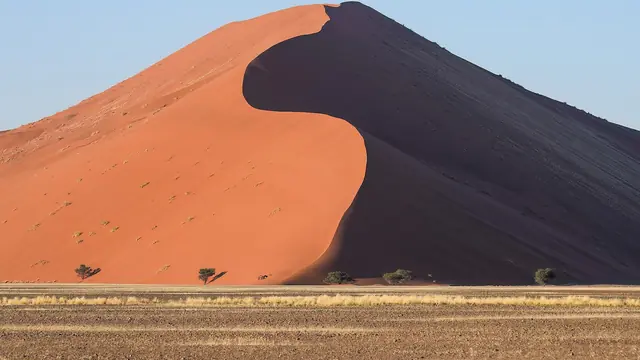
The largest hot desert, roughly the size of the United States, with ergs of 180 m dunes and mountain ranges that are colder than the lowlands.
Ethiopia
One of the hottest and lowest places on earth, with acid ponds, salt flats and sulphur springs that look actively hostile to life.
Brazil
Sand dunes filled with thousands of clear rainwater lagoons between January and June — technically not a desert at all by rainfall.
Jordan
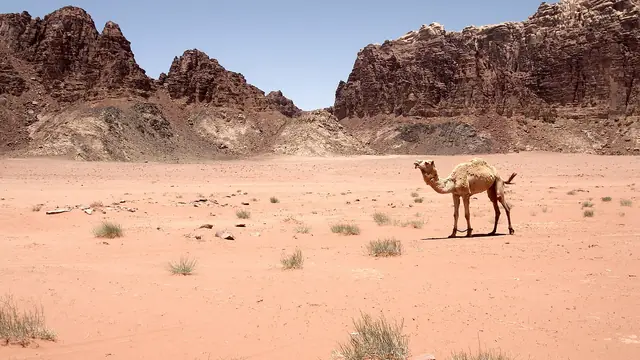
Red sandstone towers and natural arches rising straight out of the sand, inhabited and crossed by Bedouin guides for centuries.
Deserts are defined by dryness, not sand. Explore eight deserts that look nothing like a desert, from Egypt's White Desert to Antarctica and Brazil's dune lagoons.
A first-hand account of crossing the Sahara desert by vehicle. Preparation, extreme heat and cold, dune navigation, oases, desert hospitality, and the mental experience.
Twelve landscapes on Earth that look like other worlds. From Ethiopia's Danakil Depression and Bolivia's salt flats to Antarctica's dry valleys and Iceland's black sand deserts.