How Glaciers Carve Valleys: Reading the Landscape They Leave Behind
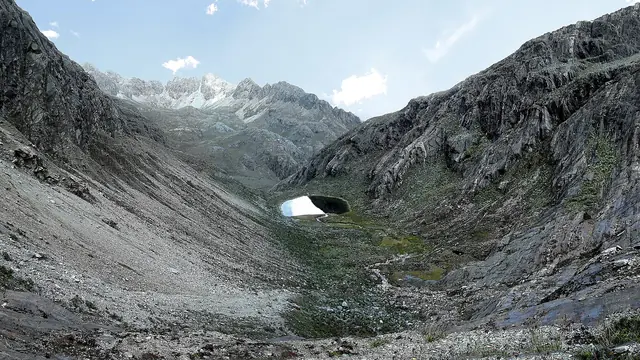
U-shaped valleys, hanging valleys, moraines and erratics. How to look at a mountain landscape and read the glacier that shaped it.
Rivers of ice that record climate, carve mountains, and are disappearing on a human timescale.
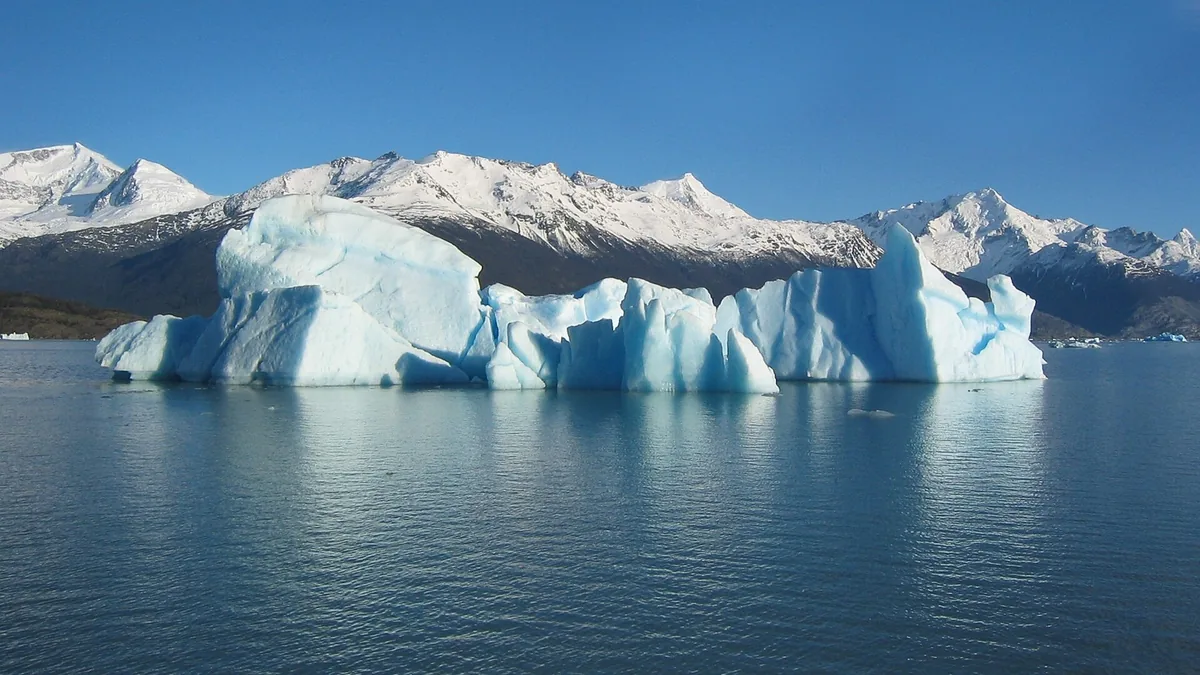
A glacier forms where more snow falls in winter than melts in summer, year after year, until the accumulated weight compresses the lower layers into ice. Once the mass is roughly 30 m thick, it begins to deform and flow under its own weight. That flow is what makes glaciers geological agents rather than just frozen water: they quarry rock, carve valleys into U-shapes and deposit the debris as moraine.
The mechanism, without the jargon.
For walking on glaciers, the local summer: June to August in the northern hemisphere, November to March in Patagonia. For ice caves, midwinter to early spring, when the meltwater channels are frozen open and stable enough to enter.
Never walk onto a glacier without a guide, a harness, crampons and a rope team unless you have been trained. Crevasses are frequently bridged by snow that gives way without warning. Ice caves require a guide for the same reason, plus helmets.
Glacier viewpoints on public land are generally free. Guided glacier walks, ice cave tours and ice climbing are priced as guided activities and usually include equipment. Some glaciers require a national park or conservation area fee on top.
Five worth building a trip around.
Iceland
Meltwater carves cathedral-like blue caves under Europe's largest ice cap each summer; they are only stable enough to enter in winter.
Antarctica
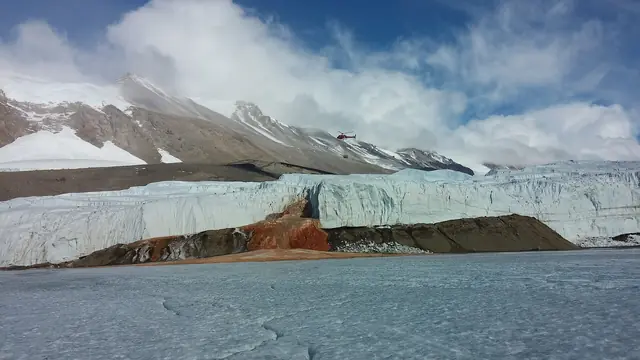
A rust-red brine outflow from beneath the Taylor Glacier, fed by a subglacial pocket of salt water isolated for over a million years.
Argentina
One of the few glaciers that is not retreating, and one of the few where you can watch house-sized ice blocks calve from a boardwalk.
Norway
The largest glacier in continental Europe, with arms reaching down into green valleys at surprisingly low altitude.
New Zealand
Glaciers that descend into temperate rainforest — an almost unique combination of ice and jungle in the same valley.
U-shaped valleys, hanging valleys, moraines and erratics. How to look at a mountain landscape and read the glacier that shaped it.
Why does Antarctica's Blood Falls bleed red? The science behind the rust-colored waterfall, the ancient subglacial brine, and what it means for life on other planets.
Why does Antarctica's Blood Falls bleed red? The science behind the rust-colored waterfall, the ancient subglacial brine, and what it means for life on other planets.
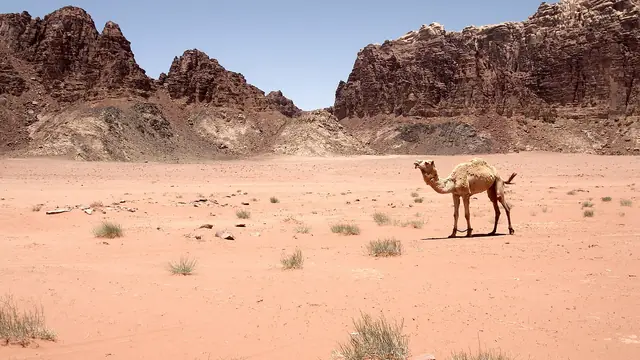
Twelve landscapes on Earth that look like other worlds. From Ethiopia's Danakil Depression and Bolivia's salt flats to Antarctica's dry valleys and Iceland's black sand deserts.