Why Are Some Mountains Flat on Top? The Geology of Tepuis and Mesas
Table mountains in Venezuela, Utah and South Africa share a formation story: hard caprock over soft rock, carved by erosion over millions of years.
Places on earth that don't photograph like earth, and usually have a straightforward explanation.
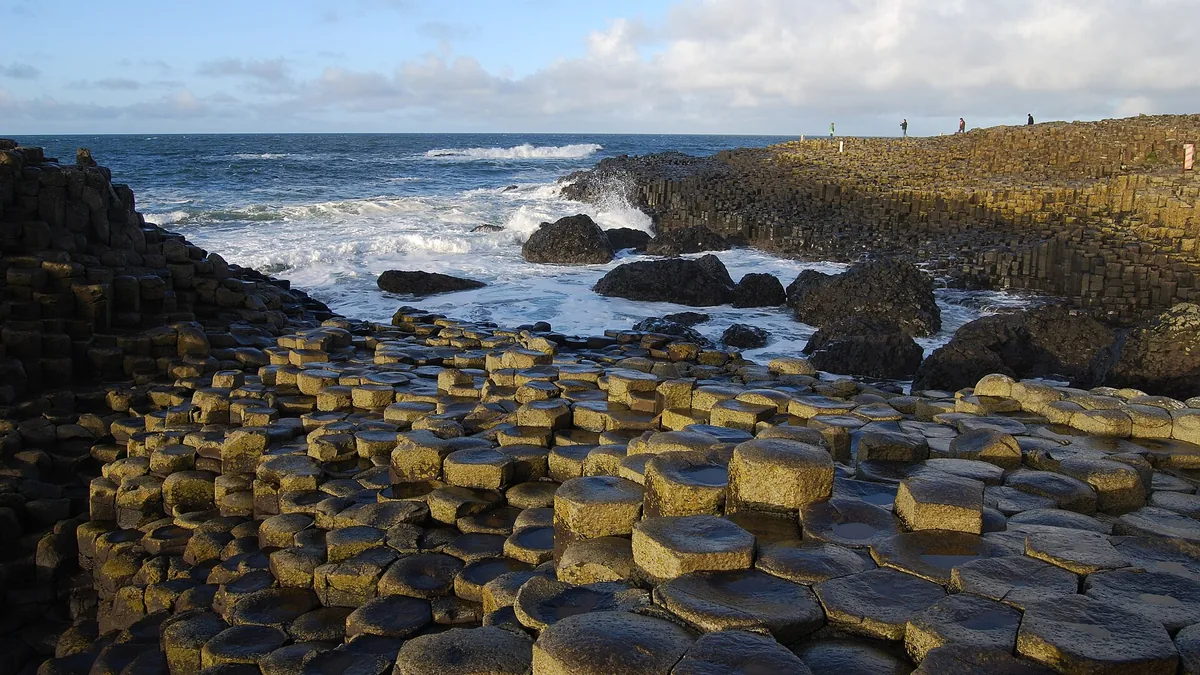
Earth has places that look like other planets and are used for exactly that purpose — as analogue sites for testing Mars rovers, or as film locations for other worlds. What makes them convincing is usually not the colour but the absence of the things we read as normal: no vegetation, no scale reference, no water, and a surface texture produced by processes that dominate somewhere else in the solar system.
The mechanism, without the jargon.
Follow the desert rules: avoid the peak of summer, and aim for the low sun of early morning or late afternoon, when relief casts shadows and the colour saturates.
Many of these sites are genuinely remote, and several require a guide, a permit, or a convoy. Some are on active volcanoes or near unstable ground, where access conditions change from month to month.
Expect national park or geopark entry fees, mandatory guide charges in several locations, and in some places a conservation fee that funds the research station or local community.
Five worth building a trip around.
Ethiopia
Yellow sulphur fields, acid ponds and salt plains at 100 m below sea level, in temperatures that regularly exceed 45 °C.
Ethiopia
A hydrothermal field in a volcanic crater, with acid pools in shades of green and yellow that look like nothing else on the surface.
Yemen
Dragon blood trees and bottle trees on an island isolated long enough to build a flora found nowhere else.
Bolivia
The world's largest salt flat: 10,000 km² of blinding white polygons that becomes a mirror in the wet season.
Jordan
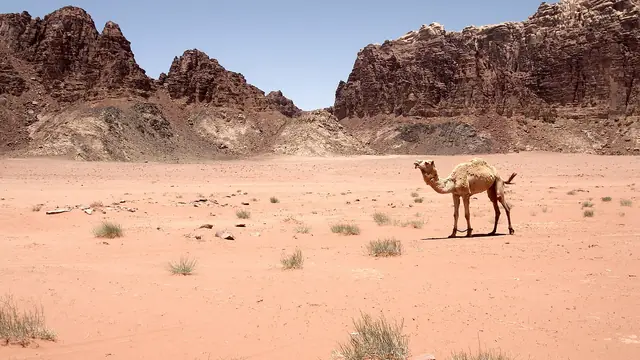
Red sandstone massifs rising from sand, so convincingly Martian that it has stood in for Mars in multiple films.
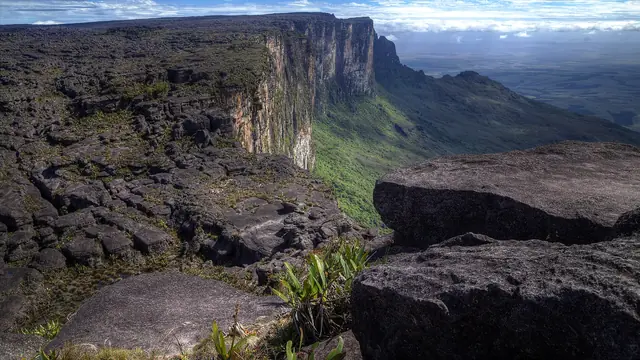
Table mountains in Venezuela, Utah and South Africa share a formation story: hard caprock over soft rock, carved by erosion over millions of years.
Twelve landscapes on Earth that look like other worlds. From Ethiopia's Danakil Depression and Bolivia's salt flats to Antarctica's dry valleys and Iceland's black sand deserts.
Twelve landscapes on Earth that look like other worlds. From Ethiopia's Danakil Depression and Bolivia's salt flats to Antarctica's dry valleys and Iceland's black sand deserts.
Deserts are defined by dryness, not sand. Explore eight deserts that look nothing like a desert, from Egypt's White Desert to Antarctica and Brazil's dune lagoons.
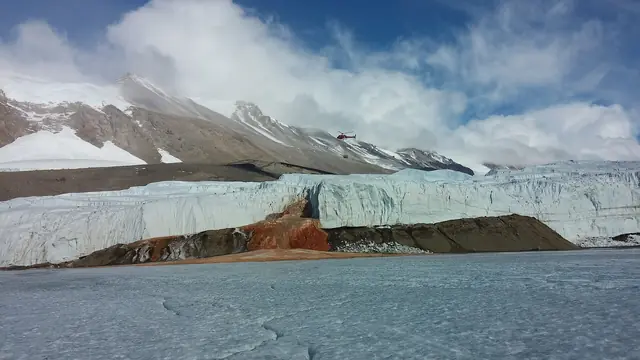
Why does Antarctica's Blood Falls bleed red? The science behind the rust-colored waterfall, the ancient subglacial brine, and what it means for life on other planets.